

E-Commerce Data Scraping in 2026: The Complete Guide to Product Intelligence, Price Monitoring, Competitor Analysis & Market Domination
📑 Table of Contents
- Introduction: Why E-Commerce Data Scraping Is the Biggest Competitive Advantage in 2026
- What Is E-Commerce Data Scraping?
- Why E-Commerce Data Scraping Matters More Than Ever
- Types of E-Commerce Data You Can Scrape
- Top 8 Use Cases for E-Commerce Data Scraping
- Major Platforms for E-Commerce Data Extraction
- Price Monitoring & Competitor Tracking: A Deep Dive
- Building Product Intelligence with Scraped Data
- Common Challenges & How to Overcome Them
- Best Practices for E-Commerce Data Scraping in 2026
- Why ScraperScoop Is the #1 Choice for E-Commerce Data
- Getting Started: Your Next Steps
- FAQ: E-Commerce Data Scraping
Introduction: Why E-Commerce Data Scraping Is the Biggest Competitive Advantage in 2026
Imagine this scenario: your biggest competitor silently drops prices on 200 high-demand products at 2 AM on a Tuesday. By the time your team notices during the morning standup, you've already lost thousands of potential sales. Customers who were ready to buy from you saw a better deal and clicked away — permanently.
This isn't hypothetical. It happens every single day across Amazon, Walmart, Flipkart, eBay, Shopify storefronts, and thousands of other online marketplaces. The businesses that win are the ones with real-time e-commerce data scraping systems that catch these changes the moment they happen — and respond instantly.
In 2026, the global e-commerce market has crossed $7.5 trillion in annual revenue. With over 26 million online stores competing for consumer attention, the margin between success and failure often comes down to one thing: who has better data.
That's exactly what this guide is about. Whether you're a startup trying to find product-market fit, a mid-size retailer optimizing pricing, or an enterprise brand building comprehensive market intelligence — this 2000+ word deep dive will show you exactly how e-commerce data scraping can transform your business in 2026 and beyond.
What Is E-Commerce Data Scraping?
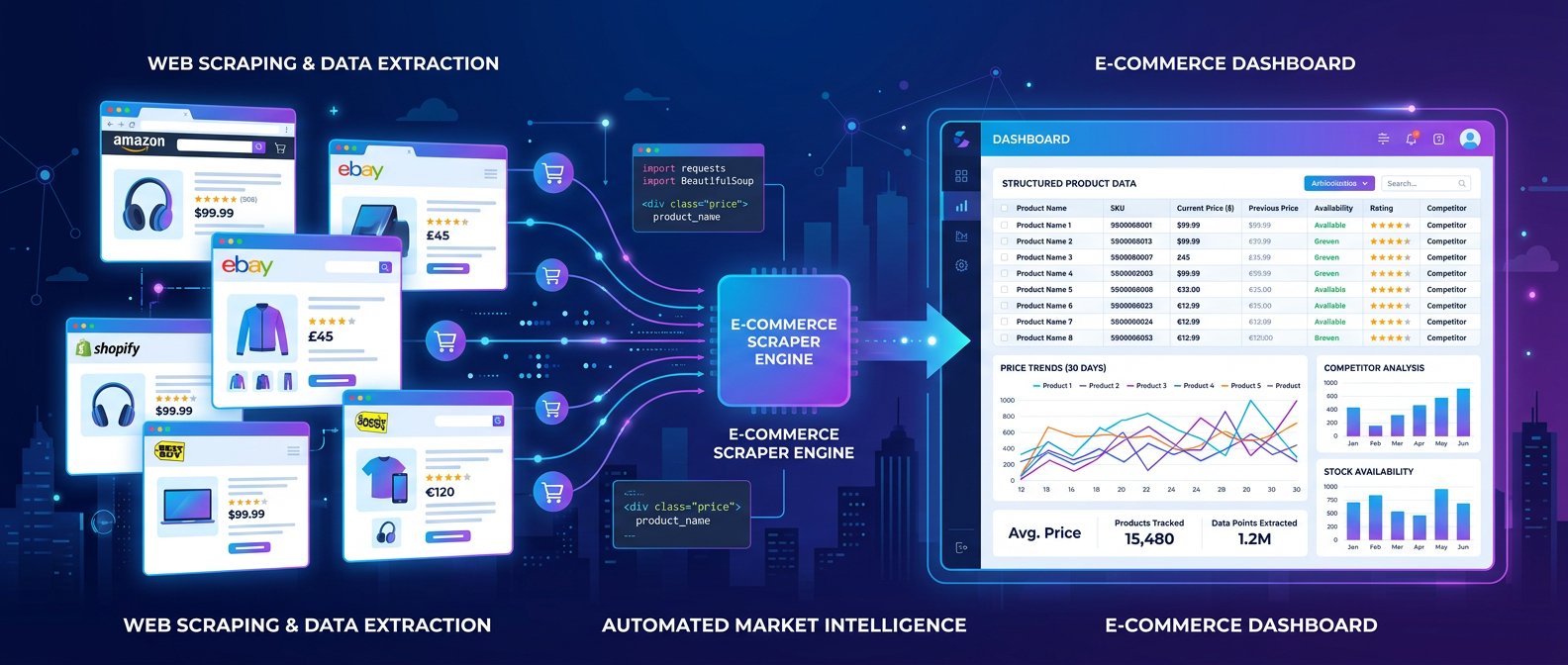
E-commerce data scraping is the automated process of extracting structured information from online retail websites, marketplaces, and digital storefronts. Instead of manually visiting hundreds of product pages and copying data into spreadsheets — a process that would take thousands of human hours — specialized web scraping services use intelligent bots to collect this data at massive scale, with pinpoint accuracy and lightning speed.
Think of it as giving your business a superpower: the ability to see every product, every price, every review, every inventory change across your entire competitive landscape — updated in real time, structured in clean formats, and ready for analysis.
The data extracted typically includes product names, descriptions, pricing (current, historical, and discounted), customer reviews and ratings, seller information, stock availability, shipping details, product images, category classifications, and much more. This raw data is then cleaned, structured, and delivered in formats like CSV, JSON, or through API-based data delivery systems that integrate directly with your existing business tools.
Why E-Commerce Data Scraping Matters More Than Ever
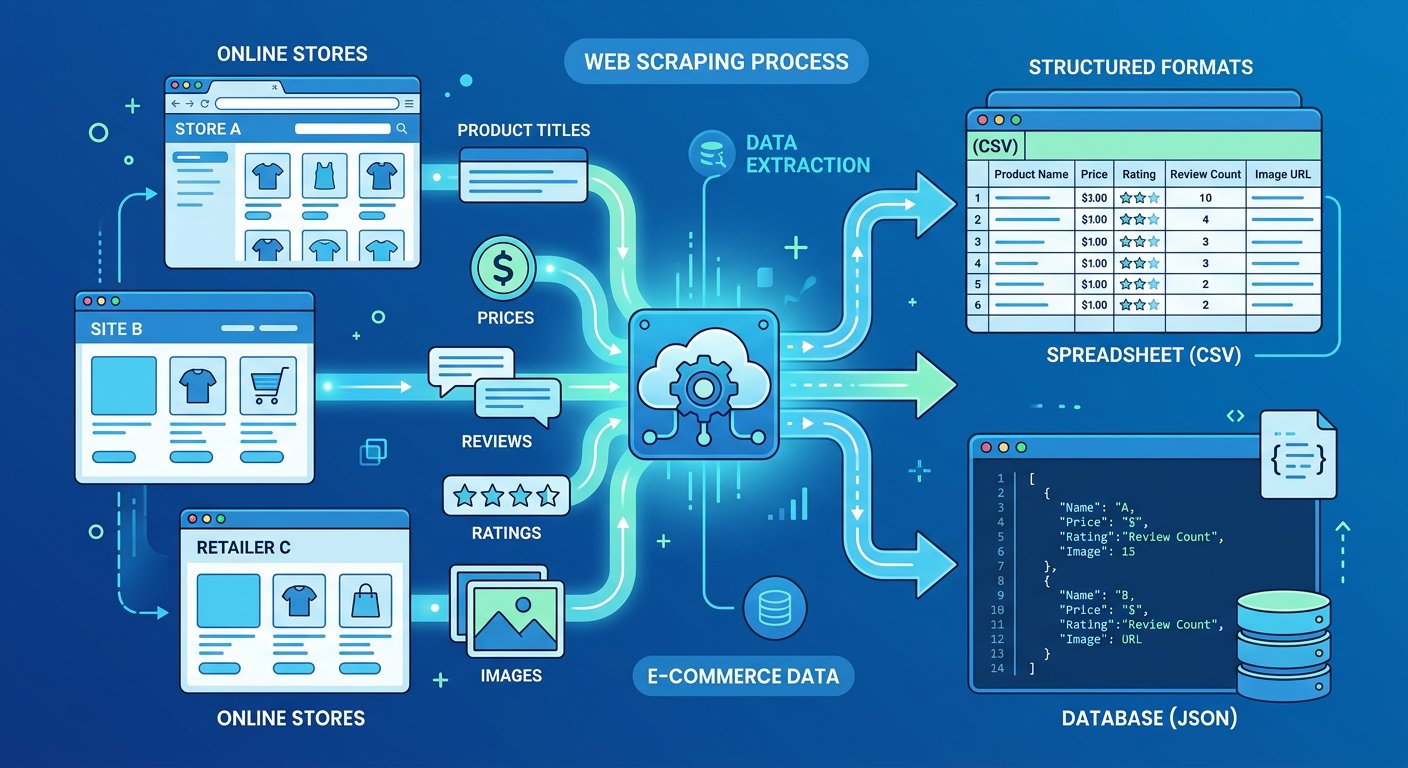
The e-commerce landscape in 2026 is fundamentally different from even two years ago. Here's why product data extraction has become non-negotiable for serious businesses:
🔹 Dynamic Pricing Has Gone Mainstream
Amazon alone changes prices on millions of products multiple times per day. If you're not tracking these changes in real time, you're flying blind. Price intelligence & monitoring is no longer a luxury — it's table stakes for any competitive e-commerce operation.
🔹 Consumer Expectations Are Sky-High
Today's shoppers compare prices across 5+ platforms before making a purchase. They read reviews, check ratings, compare specifications, and look at seller reputation. The businesses that understand these behaviors through data win the sale. Those that guess, lose it.
🔹 Market Intelligence Drives Every Decision
From product launches to inventory planning, from marketing campaigns to geographic expansion — every strategic decision is better when backed by comprehensive market research & competitive analysis data scraped directly from the marketplace.
Types of E-Commerce Data You Can Scrape
Understanding what data is available is the first step to building a powerful intelligence system. Here are the most valuable categories of e-commerce data that businesses extract in 2026:
Product Catalog Data
Product titles, descriptions, specifications, SKUs, categories, brand names, and product images. Essential for catalog enrichment and competitive benchmarking.
Pricing & Discount Data
Current prices, MRP, discount percentages, coupon codes, flash sale pricing, subscription prices, and historical price trends across all marketplaces.
Reviews & Ratings
Customer reviews, star ratings, review counts, verified purchase indicators, review sentiment, and reviewer demographics. Powers product review & rating scraping insights.
Inventory & Stock Data
Stock availability, quantity indicators, out-of-stock alerts, restock dates, and product inventory scraping for supply chain intelligence.
Seller & Merchant Data
Seller names, ratings, fulfillment methods (FBA, FBM), seller location, return policies, and marketplace share analysis.
Shipping & Delivery Data
Delivery timelines, shipping costs, free shipping thresholds, same-day delivery availability, and logistics partner information.
Top 8 Use Cases for E-Commerce Data Scraping
Let's get specific. Here are the eight most powerful ways businesses are using ecommerce data scraping services to drive revenue, reduce costs, and outsmart competitors:
Dynamic Price Optimization
Monitor competitor prices across multiple platforms in real time and adjust your own pricing dynamically. Businesses using price monitoring & competitor tracking report 15–30% increases in profit margins within the first quarter. The key is not just knowing what competitors charge, but understanding when they change prices, how often, and by how much.
Product Assortment & Gap Analysis
Discover which products competitors carry that you don't. Identify trending products entering the market before they saturate. Find underserved niches where demand exists but supply is limited. This kind of intelligence is the foundation of winning product strategy.
Customer Sentiment Analysis
Scrape thousands of product reviews across platforms and analyze sentiment patterns. Understand what customers love about competitor products, what they hate, and where the opportunity lies for your brand to differentiate. Brand monitoring & review analysis turns raw reviews into product development roadmaps.
MAP (Minimum Advertised Price) Compliance
If you're a brand selling through authorized resellers, monitoring MAP compliance is critical. Automated scraping detects unauthorized price drops instantly, protecting your brand equity and channel relationships.
Marketplace Entry & Expansion Research
Before entering a new marketplace or geographic market, scrape existing product listings to understand the competitive landscape, pricing expectations, popular brands, and demand signals. This research reduces the risk of failed market entry dramatically.
SEO & Content Optimization for Product Pages
Analyze how top-performing products structure their titles, descriptions, bullet points, and keywords. Use these insights to optimize your own product listings for higher organic search visibility on platforms like Amazon, Walmart, and Google Shopping.
Supply Chain & Demand Forecasting
Track stock levels and availability patterns across the market to forecast demand, optimize your inventory, and avoid both overstocking and stockouts. This data becomes even more powerful when combined with historical trends.
Investment & M&A Due Diligence
Investors and private equity firms use e-commerce scraping data to evaluate DTC brands, assess market positioning, verify revenue claims, and conduct competitive landscape analysis before making investment decisions.
Major Platforms for E-Commerce Data Extraction
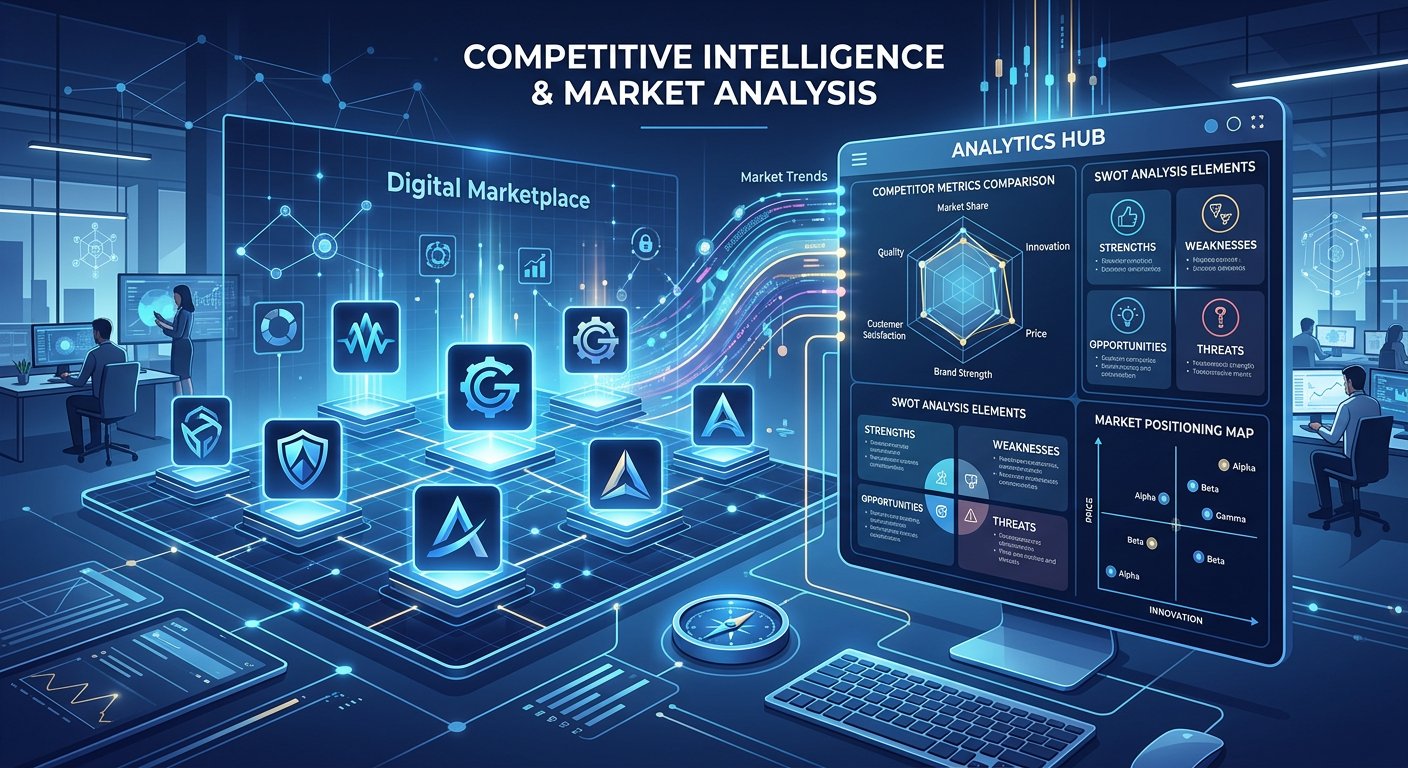
Each e-commerce platform presents unique opportunities and technical challenges for data extraction. Here's how the major platforms stack up in 2026:
Beyond individual platforms, ScraperScoop also provides comprehensive E-Commerce datasets that aggregate data across multiple platforms, giving you a unified view of the market. For specific product categories, check out our Amazon datasets and featured datasets collections.
Price Monitoring & Competitor Tracking: A Deep Dive
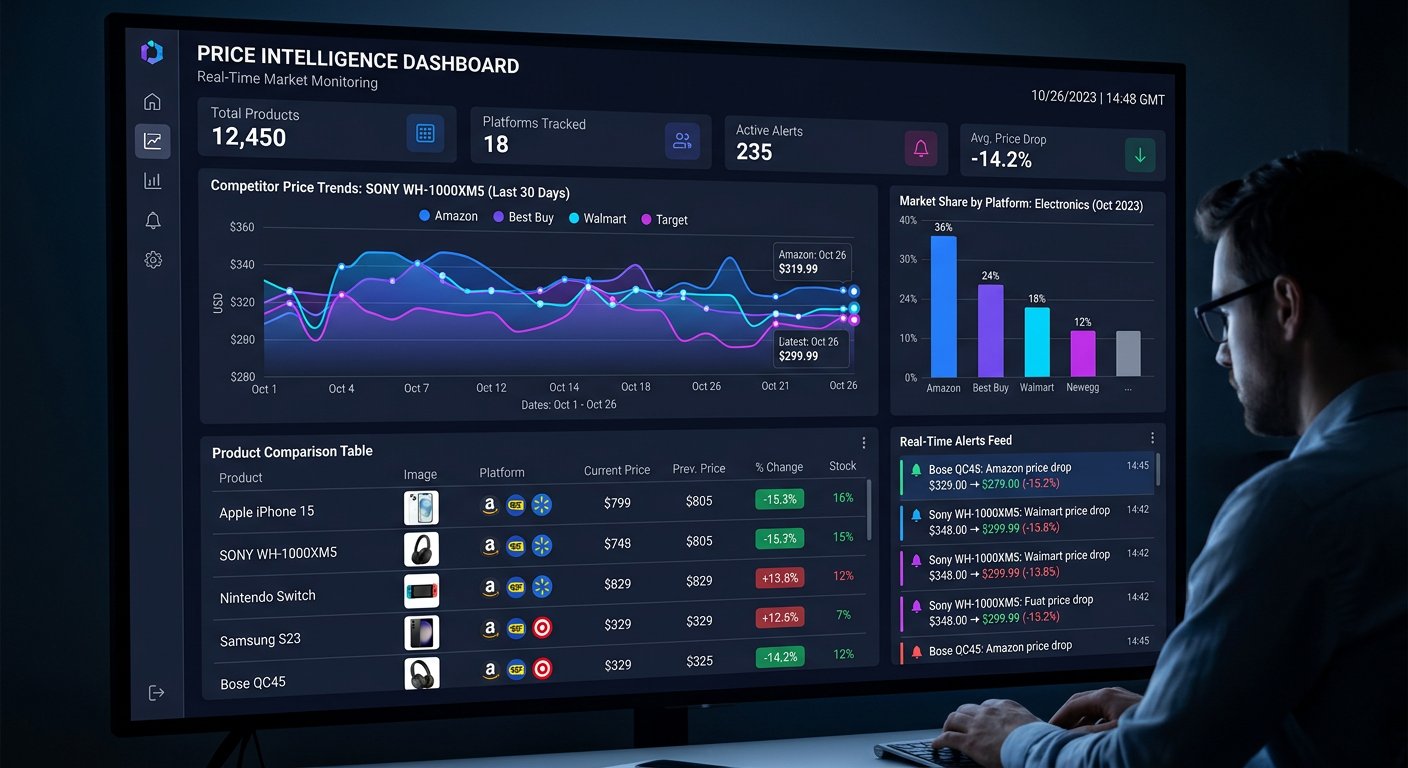
If there's one use case that delivers the fastest ROI from e-commerce data scraping, it's price monitoring. Here's why — and how to do it right.
The Economics of Competitive Pricing
Research from McKinsey shows that a 1% improvement in pricing translates to an 8.7% increase in operating profits for the average retailer. When you multiply that across thousands of SKUs, the numbers become staggering. Yet most retailers still rely on manual spot-checks or outdated weekly reports to track competitor prices.
Modern price intelligence & monitoring systems scrape competitor prices every 15 minutes, detect changes instantly, and trigger automated repricing rules. The result? You're never overpriced (losing sales) or underpriced (leaving money on the table).
What a World-Class Price Monitoring System Looks Like
- Multi-platform tracking: Monitor prices on Amazon, Walmart, eBay, Flipkart, and direct-to-consumer sites simultaneously
- Historical price analytics: See how prices have trended over weeks, months, and seasons to predict future movements
- Alert-based notifications: Get instant alerts when a competitor drops price below your threshold
- MAP violation detection: Automatically flag unauthorized sellers who undercut your minimum advertised price
- Dynamic repricing integration: Connect your price monitoring data directly to your repricing engine for automated responses
- Promotional tracking: Monitor competitor coupons, flash sales, bundle deals, and loyalty pricing
Building Product Intelligence with Scraped Data
Price monitoring is just one dimension. The real magic happens when you combine pricing data with product intelligence — a comprehensive understanding of what's selling, who's selling it, what customers think about it, and where the market gaps are.
💡 Real-World Example: How a D2C Brand Used Scraped Data to 3x Revenue
A direct-to-consumer skincare brand came to ScraperScoop wanting to understand why their Amazon sales were plateauing. We set up automated scraping of their top 50 competitors, extracting product listings, reviews, ratings, pricing history, and advertising data.
The insights were eye-opening: competitors were using specific keywords in titles that drove 3x more organic visibility. Their price point was 12% higher than the sweet spot for their category. And negative reviews about competitor products revealed a specific ingredient concern that they could address in their formulation.
Within 6 months of implementing data-driven changes based on our competitor analysis data scraping, the brand saw a 3.2x increase in revenue and climbed to the #3 best-seller position in their category.
Key Components of Product Intelligence
- Trend Detection: Identify rising product categories and declining ones before they show up in industry reports
- Feature Analysis: Compare product specifications across competitors to find differentiation opportunities
- Review Mining: Extract actionable insights from thousands of customer reviews using NLP and sentiment analysis
- Assortment Optimization: Determine the ideal product mix based on market demand and competitive gaps
- Listing Quality Scoring: Benchmark your product listings against top performers for content quality, images, and SEO
Common Challenges & How to Overcome Them
E-commerce data scraping isn't without its hurdles. Here are the most common challenges businesses face — and how professional custom data scraping services overcome them:
🛡️ Anti-Bot & Anti-Scraping Defenses
Challenge: Major platforms use CAPTCHAs, rate limiting, IP blocking, browser fingerprinting, and honeypot traps to prevent automated access.
Solution: Professional scraping services use rotating residential proxies, headless browser automation, CAPTCHA solving AI, and sophisticated request patterns that mimic real human browsing behavior.
🔄 Frequent Layout Changes
Challenge: E-commerce sites redesign their pages regularly, breaking scraper selectors and causing data collection failures.
Solution: AI-powered adaptive scrapers with self-healing selectors that detect layout changes automatically and adjust extraction logic without manual intervention.
📊 Data Quality & Consistency
Challenge: Raw scraped data often contains duplicates, missing fields, inconsistent formatting, and noise that makes analysis unreliable.
Solution: Robust data cleaning & structuring pipelines that validate, deduplicate, normalize, and enrich data before delivery.
⚡ Scale & Speed Requirements
Challenge: Scraping millions of products across dozens of platforms within tight time windows requires massive infrastructure.
Solution: Distributed scraping architecture with cloud-based auto-scaling, scheduled data scraping capabilities, and enterprise-grade infrastructure designed for high-volume extraction.
Best Practices for E-Commerce Data Scraping in 2026

Whether you're building an in-house scraping solution or partnering with a professional service, these best practices will ensure you get maximum value from your data:
Define Clear Data Requirements First
Before writing a single line of code, document exactly which data points you need, from which platforms, at what frequency, and in what format. A well-defined data specification saves weeks of development time and ensures you collect what actually matters.
Prioritize Data Quality Over Quantity
It's better to have 10,000 perfectly clean, validated records than 1 million messy ones. Invest in data validation, deduplication, and quality monitoring. Bad data leads to bad decisions.
Respect Ethical & Legal Boundaries
Always respect robots.txt, comply with GDPR and CCPA regulations, avoid scraping personal data without consent, and ensure your data collection practices are ethical and sustainable. Professional services like ScraperScoop are built with compliance at their core.
Build Real-Time Data Pipelines
Static one-time data pulls have limited value. Build automated, recurring data pipelines using real-time data & APIs to ensure your intelligence is always current and actionable.
Integrate Data Into Your Decision-Making Workflow
The most sophisticated scraping system is useless if the data sits in a spreadsheet nobody opens. Integrate scraped data into your BI tools, pricing engines, product management systems, and CRM platforms for immediate action.
Partner with Experts When Scale Demands It
Building and maintaining enterprise-grade scraping infrastructure in-house is expensive and resource-intensive. For most businesses, partnering with specialized web scraping services delivers faster results at lower total cost of ownership.
Why ScraperScoop Is the #1 Choice for E-Commerce Data
At ScraperScoop, e-commerce data isn't just one of our services — it's our specialization. We've built enterprise-grade data extraction systems that power pricing decisions, product strategies, and market intelligence for 500+ businesses worldwide.
99.9% Data Accuracy
Multi-layer validation ensures every record is accurate, complete, and ready for analysis.
Real-Time Extraction
Monitor prices and products with updates as frequent as every 15 minutes across all major platforms.
Global Coverage
Data from 195+ countries, 500+ e-commerce platforms, and millions of products and sellers.
Custom Solutions
Every business is different. We build tailored extraction pipelines that match your exact requirements.
Ready-to-Use Datasets
Don't want to wait? Browse our library of pre-built, cleaned, and structured e-commerce datasets for instant download.
24/7 Expert Support
Dedicated data engineers and account managers ensure your projects run smoothly from day one.
Ready to Transform Your E-Commerce Strategy with Data?
Whether you need a one-time product data dump, ongoing competitive monitoring, or a fully customized data pipeline — ScraperScoop has you covered. Our team of data experts will design the perfect solution for your business.
✅ Free sample data · ✅ No credit card required · ✅ Response within 2 hours
Getting Started: Your Next Steps
Ready to harness the power of e-commerce data scraping for your business? Here's a simple roadmap to get started:
Define Your Intelligence Goals
What decisions will this data inform? Pricing? Product development? Market entry? Start with the business outcome, not the data.
Identify Your Data Sources
Which platforms, competitors, and product categories matter most? Prioritize the data that will have the highest impact on your decisions.
Choose Your Approach
Decide between ready-made datasets for instant insights, or custom data scraping services for tailored, ongoing extraction.
Talk to Our Experts
Contact us for a free consultation. Our team will assess your requirements and recommend the most cost-effective solution — with a free sample to validate quality before you commit.
FAQ: E-Commerce Data Scraping
Is e-commerce data scraping legal?
Yes, scraping publicly available e-commerce data is generally legal, especially when it involves product prices, descriptions, and other publicly listed information. However, it's important to respect terms of service, avoid scraping personal data, and comply with data protection regulations like GDPR and CCPA. ScraperScoop follows ethical and legally compliant scraping practices.
How often can you update scraped e-commerce data?
We offer flexible update frequencies — from real-time (every 15 minutes) to hourly, daily, weekly, or custom schedules depending on your needs. For price monitoring, most clients prefer hourly or real-time updates. For catalog and review data, daily or weekly updates are typically sufficient.
What formats do you deliver e-commerce data in?
We deliver data in CSV, JSON, Excel, Parquet, and through API-based data delivery. We can also push data directly to your cloud storage (S3, GCS, Azure Blob), data warehouse (Snowflake, BigQuery, Redshift), or BI tools.
Can you scrape data from any e-commerce website?
Yes. Our infrastructure handles simple static websites, complex JavaScript-rendered SPAs, mobile app data, and even sites with aggressive anti-bot protections. We've successfully scraped data from 500+ e-commerce platforms globally. If it's publicly accessible on the web, we can extract it.
How much does e-commerce data scraping cost?
Pricing depends on the volume of data, number of platforms, update frequency, and level of customization required. We offer flexible plans starting from free sample datasets. Contact us for a custom quote tailored to your specific requirements — we'll respond within 2 working hours.
🚀 Don't Let Competitors Out-Data You
Start Extracting E-Commerce Intelligence Today
Every day without competitive data is a day your competitors are getting ahead. Let ScraperScoop give you the data advantage you need to win.
Get Your Free Consultation Now →

