

Introduction: Why Web Scraping Is No Longer Optional for Growing Businesses
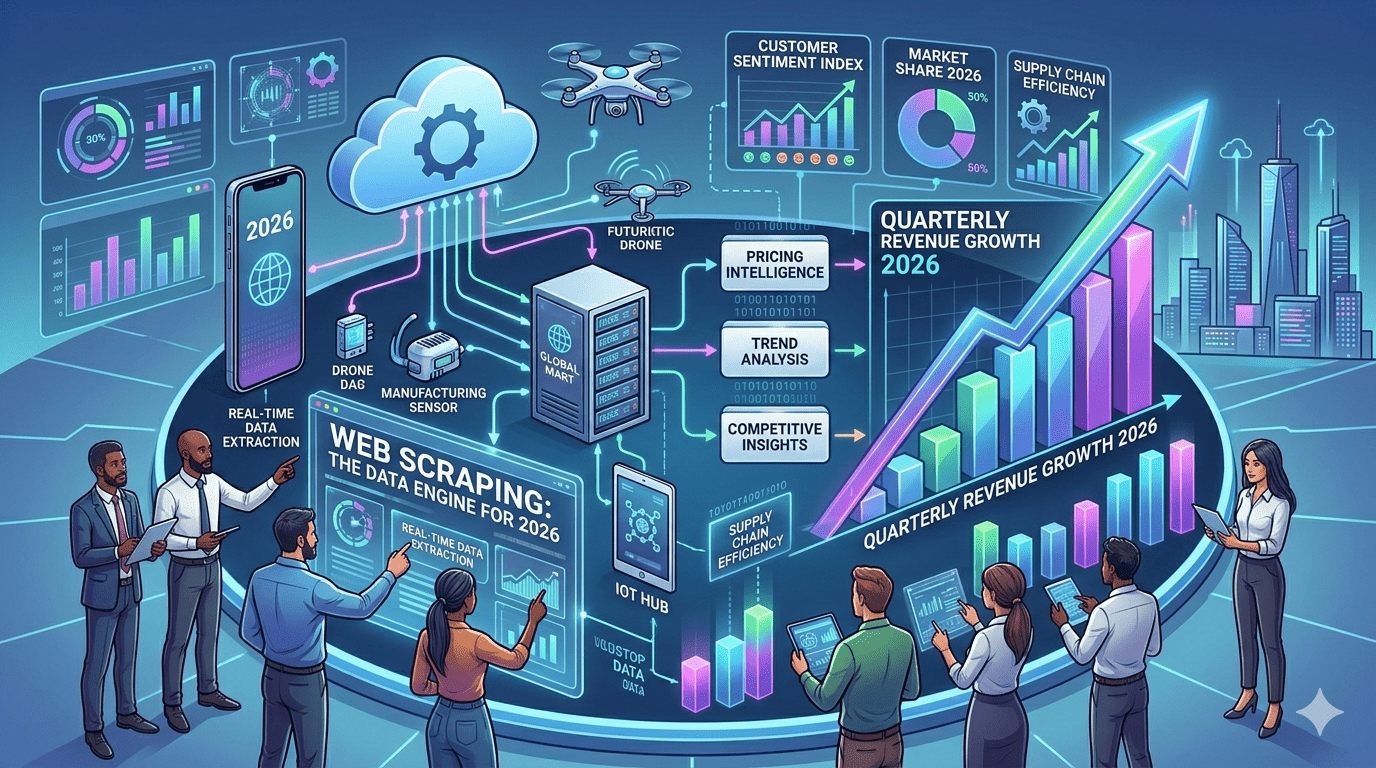
Let’s be honest — in 2026, data isn’t just “nice to have.” It’s the backbone of every smart business decision, from pricing your products correctly to understanding what your competitors are doing behind closed doors. And at the heart of this data revolution sits one powerful practice: web scraping.
Whether you’re running a fast-growing eCommerce store, managing a real estate portfolio, or building the next big travel comparison platform, the ability to extract, structure, and analyze web data at scale is what separates market leaders from everyone else. The web scraping software market is experiencing explosive growth — estimated at USD 12.34 billion in 2026 and projected to reach over USD 200 billion by 2035, growing at a CAGR of 35%. That’s not a minor trend — that’s a tectonic shift in how businesses operate.
But here’s the thing: most businesses don’t need to build scraping infrastructure from scratch. They need a partner who understands the nuances of custom web scraping services, provides clean and structured datasets, and delivers actionable results. That’s exactly what ScraperScoop was built to do.
In this comprehensive guide, we’ll walk you through everything you need to know about web scraping for business growth — from what it is and why it matters, to real-world use cases across industries, and how you can start leveraging it right now to gain more reach, traffic, and qualified leads.
What Is Web Scraping and Why Should You Care in 2026?
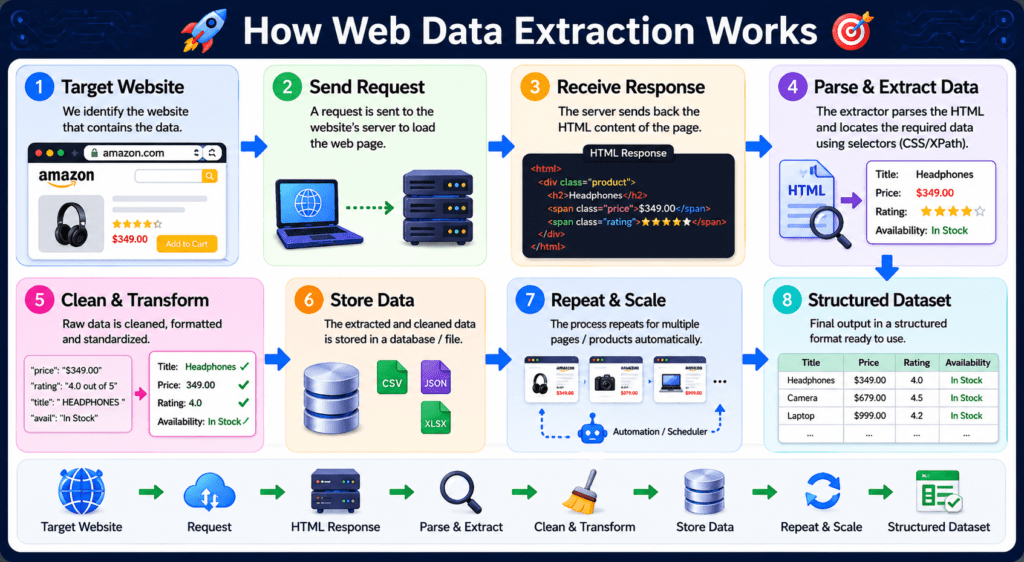
Web scraping is the automated process of extracting structured data from websites. Think of it as deploying intelligent digital assistants that can visit thousands (or millions) of web pages, pull out the specific data points you need — product prices, customer reviews, real estate listings, flight fares, restaurant menus — and deliver it to you in a clean, organized format.
What used to require teams of developers writing custom Python scripts has evolved dramatically. In 2026, the industry has shifted toward AI-driven, cloud-based, and compliance-aware methods that make the old selector-heavy DIY approaches far less practical. Real browsers, managed infrastructure, and high-level APIs have become the standard because they offer greater reliability, fewer breakages, and stronger defenses against detection.
The transition is clear: web scraping has gone from being a niche, highly technical task to becoming far more accessible thanks to AI and improved automation tools. Companies across every industry — from finance to food delivery — now treat external data collection as critical infrastructure, not a side project.
The Numbers Don’t Lie
Consider these eye-opening stats that demonstrate just how far the industry has come:
- The Global Web Scraping Services Market was valued at approximately USD 479 million in 2025 and is projected to reach USD 762 million by 2034, with a 6.9% CAGR.
- AI-powered scraping delivers 30–40% faster data extraction times compared to traditional approaches.
- AI-based scrapers can now achieve accuracy rates of up to 99.5% when handling dynamic, JavaScript-heavy websites.
- Nearly half of all internet traffic in 2026 will come from automated bots — showing just how embedded data collection has become in the fabric of the web.
- E-commerce, finance, travel, real estate, and AI technology lead in web scraping adoption, each using web data for pricing intelligence, trend tracking, or training models.
Investment in scraping technology is not just a short-term trend — it’s a long-term business enabler. And organizations of every size are now prioritizing systems that deliver up-to-date, high-quality datasets.
How Web Scraping Fuels Business Growth: 8 High-Impact Use Cases
Now let’s get practical. How exactly can web data extraction put money in your pocket and customers in your pipeline? Here are eight proven use cases that businesses are actively profiting from right now.
1. Competitive Pricing Intelligence
This is arguably the most popular application of ecommerce web scraping. By monitoring your competitors’ pricing pages, you get a timestamped log of every change — not just current prices, but the full history. That history reveals seasonal patterns, promotional cycles, and the quiet price adjustments that directly affect your conversion rates.
Retailers running dynamic pricing models across thousands of SKUs have been leveraging this for years. With the right custom web scraping partner, the same capability is now accessible to businesses of any size. At ScraperScoop, we provide ready-made pricing datasets and custom scrapers that keep you ahead of the competition 24/7.
2. Lead Generation at Scale
Forget buying stale lead lists from generic providers. Web scraping for lead generation allows your sales team to build comprehensive, fresh lead lists by extracting data from professional networking sites, online directories, industry forums, and business listing pages. You get names, emails, company details, and contextual information that makes your outreach far more relevant and effective.
Ready to supercharge your lead pipeline? Talk to our data experts at ScraperScoop and let us build a custom lead generation dataset tailored to your target market.
3. Market Research & Trend Analysis
Understanding market trends before they become mainstream gives you a massive first-mover advantage. By scraping data from social media platforms, news sites, forums, and industry publications, businesses gain real-time insight into shifting consumer preferences, emerging product categories, and market sentiment.
These insights feed directly into better product development decisions, marketing campaigns, and strategic planning. Companies winning on competitive intelligence in 2026 treat external data collection as infrastructure, not a quarterly reporting project.
4. Product & Catalog Monitoring
For eCommerce businesses, keeping your product catalog optimized is a never-ending battle. Web scraping allows you to monitor competitor product listings, track new product launches, identify gaps in your own catalog, and even detect when competitors quietly update specifications or materials without changing the SKU.
5. Review & Sentiment Analysis
Platforms like G2, Trustpilot, Amazon, and Google Reviews are goldmines of unfiltered customer feedback. By scraping and analyzing review data — both yours and your competitors’ — you see the full picture: where you’re winning, where you’re exposed, and the exact words customers use to describe their experiences.
When dozens of reviews in a short window all mention the same pain point, that’s a signal about what your market cares about — and where there might be a gap worth filling.
6. Real Estate Data Intelligence
The real estate industry thrives on data. Property listings, price histories, neighborhood demographics, rental yields, agent information — all of this data is scattered across dozens of platforms. Web scraping for real estate aggregates it all into a single, structured view that helps investors, agents, and proptech companies make faster, smarter decisions.
ScraperScoop offers specialized real estate datasets and custom scraping solutions that deliver exactly this kind of intelligence.
7. Travel & Hospitality Price Tracking
Flight prices, hotel rates, and vacation packages change multiple times a day. Travel companies and comparison platforms use web scraping APIs to capture these changes in real time, ensuring their customers always see the most accurate and competitive pricing. It’s the invisible engine behind every travel deal site you’ve ever used.
8. Food Delivery & Restaurant Analytics
From tracking menu prices and restaurant ratings on platforms like Uber Eats, DoorDash, and Zomato, to analyzing delivery coverage areas and promotional strategies — web scraping gives food delivery businesses the granular data they need to compete and grow in an incredibly fast-moving market.
The AI Revolution in Web Scraping: What’s Changed in 2026
If there’s one theme that defines web scraping in 2026, it’s the deep integration of Artificial Intelligence and Machine Learning. This isn’t just an incremental upgrade — it’s a fundamental transformation of how data extraction works.
AI-Native Data Extraction
Instead of manually writing CSS selectors or tracking DOM details, modern scraping tools let you simply describe the data you need in natural language, and AI models interpret the structure. This intent-based approach means that even non-technical users — marketers, analysts, operations teams — can now build data collection pipelines that previously required engineering support.
AI-powered scrapers can dynamically adjust to layout changes and unexpected variations in site structure. This eliminates one of the biggest historical headaches: scraper breakage every time a target website updates its design.
Speed, Accuracy, and Self-Healing
The practical benefits are staggering. AI-powered scraping delivers 30–40% faster extraction, AI-based scrapers achieve accuracy rates of up to 99.5% on complex, JavaScript-heavy sites, and self-learning algorithms continuously adapt to handle anti-bot measures without human intervention.
Cloud-Native Infrastructure
More teams are using cloud-managed browser environments to avoid the overhead of maintaining their own server fleets. These platforms handle scaling, session management, and resource allocation automatically. With built-in retries, session continuity, and fault handling, teams spend more time analyzing data and less time troubleshooting infrastructure.
At ScraperScoop, we’ve embraced these advances across our entire platform — our custom web scraping services, APIs, and analytics dashboards are all powered by the latest AI and cloud technologies, ensuring you get the most accurate, fresh, and reliable data possible.
Why ScraperScoop Is Your Ideal Web Scraping Partner
With so many web scraping tools and providers out there, you might wonder: why ScraperScoop? The answer is simple — we’re not just a tool; we’re a full-service data partner that understands your business objectives and delivers results, not just raw data.
What Sets ScraperScoop Apart:
- Custom Web Scraping Services: We build tailored scraping solutions designed specifically for your business needs, target websites, and data requirements. No cookie-cutter templates — just precision-engineered data pipelines.
- Ready-Made Datasets: Need data fast? Our pre-built datasets across eCommerce, real estate, travel, food delivery, and more give you instant access to structured, actionable data.
- Powerful APIs: Integrate our scraping APIs directly into your existing systems and workflows for seamless, real-time data access.
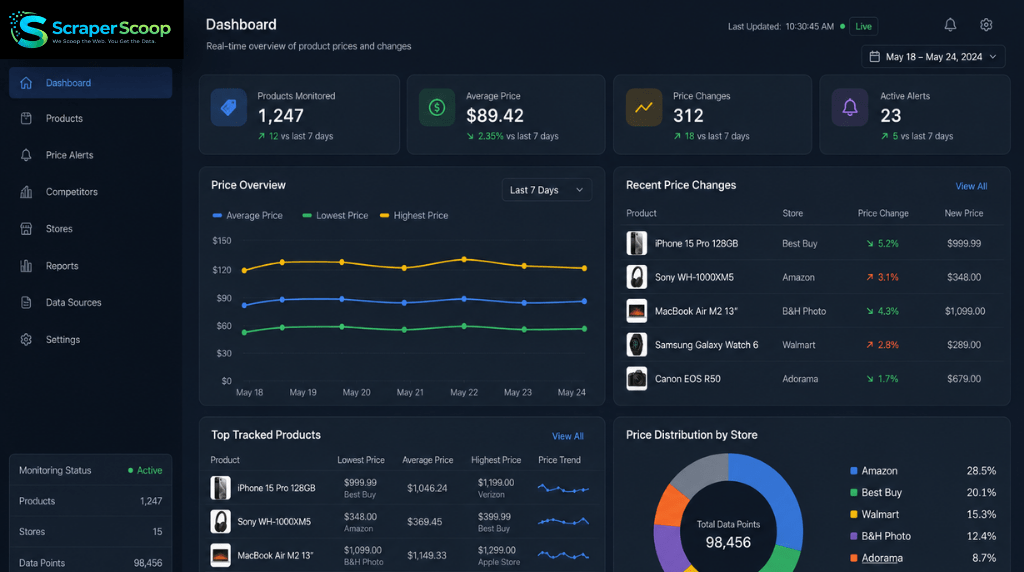
- Analytics Dashboards: Don’t just collect data — understand it. Our dashboards turn raw scraped data into visual insights that drive decision-making.
- Multi-Industry Expertise: Whether it’s eCommerce product tracking, real estate listing aggregation, travel fare monitoring, or food delivery analytics — we’ve done it all.
- Compliance-First Approach: We operate with a strong ethical foundation, respecting robots.txt, data privacy regulations like GDPR and CCPA, and platform terms of service.
The market is shifting from general-purpose tools to customized industry solutions, and that’s precisely the lane ScraperScoop occupies. We don’t just scrape websites — we deliver business intelligence.
Ready to Transform Your Business with Data?
Whether you need a one-time dataset, an ongoing data pipeline, or a fully custom scraping solution, we’re here to make it happen. Contact ScraperScoop today for a free consultation and let’s discuss how we can fuel your growth with the power of structured web data.
Industries That Benefit Most from Web Scraping in 2026
In 2026, scraping has moved far beyond eCommerce and SEO monitoring — it now touches almost every digital-first business model. Here’s how different industries are using web scraping to gain an edge:
eCommerce & Retail
The largest use case by far. Pricing intelligence, assortment tracking, and product sentiment analysis remain the dominant applications. eCommerce scraping helps businesses extract info like product details, pricing, images, and reviews from competitor websites — and this data is analyzed to obtain relevant insights for optimizing their own platforms. Dynamic pricing models, stock monitoring, and catalog gap analysis all depend on continuous web scraping.
Real Estate
Agents, investors, and proptech platforms scrape listing data across multiple portals to build comprehensive market views. Price trends, inventory levels, time-on-market metrics, and neighborhood analytics all come from systematically extracting and structuring real estate web data.
Travel & Hospitality
Fare comparison, hotel rate tracking, route analysis, and demand forecasting — all powered by real-time web scraping. Travel companies that respond fastest to price shifts win the booking.
Finance & Investment
The finance sector has embraced web scraping aggressively. Web scraping now underpins a significant majority of investment advisers’ alternative-data programs. From social media sentiment analysis to tracking company job postings for signals of strategic shifts, investors use scraped data to uncover insights not yet reflected in traditional financial statements.
Food Delivery
Menu monitoring, delivery area coverage mapping, promotional strategy analysis, and customer review aggregation across platforms like Uber Eats, DoorDash, and Zomato — all critical intelligence for food delivery businesses looking to optimize their operations.
Healthcare & Pharma
Drug pricing monitoring, clinical trial tracking, research paper aggregation, and health forum analysis are emerging use cases that leverage web scraping to keep healthcare businesses informed and compliant.
Web Scraping Best Practices: How to Do It Right
Effective web scraping isn’t just about technology — it’s about strategy and ethics. Here are the best practices that separate successful data operations from risky ones:
1. Define Clear Business Objectives
Before scraping a single page, know exactly what data you need and how it will drive a business outcome. The shift in the industry is away from “just getting the data” and toward getting the right data, at the right time, in the right way.
2. Prioritize Data Quality Over Quantity
Fresh, accurate data beats massive volumes of stale information every time. Implement schema validation, coverage checks, and freshness SLAs to keep your datasets reliable. Remember: stale data leads to wrong business decisions and missed opportunities.
3. Stay Compliant
Data privacy regulations like GDPR and CCPA have significant implications for web scraping, especially when personal information is involved. Honor robots.txt files, respect terms of service, and consult legal counsel before deploying personal data collection at scale. Operating within compliance isn’t just ethical — it’s sustainable business practice.
4. Use Professional Services When It Matters
Anti-bot systems are now standard at high-traffic websites, and operating within a site’s access patterns without triggering blocks is real engineering work — not a configuration option. Partnering with a professional web scraping service like ScraperScoop means you get reliable, compliant data without the technical headaches.
5. Automate and Schedule Intelligently
Real-time data is transforming how businesses operate. Move beyond batch-mode scraping to intelligent, event-driven data collection that keeps your insights current and actionable.
The ROI of Web Scraping: Is It Worth the Investment?
Absolutely — and the ROI goes far beyond just cost savings. Here’s how web scraping pays for itself many times over:
- Labor Cost Reduction: Automated scraping eliminates hours of manual research, cutting labor costs while dramatically enhancing data collection speed and accuracy.
- Revenue Optimization: Competitive pricing intelligence directly translates to better margins and higher conversion rates. Knowing your market position in real-time lets you price confidently.
- Faster Decision-Making: Speed is critical with time-sensitive datasets. Faster extraction means fresher insights and quicker responses to market changes.
- Lead Quality Improvement: Custom-scraped lead lists are fresher, more targeted, and more relevant than anything you can buy off the shelf — resulting in higher conversion rates and shorter sales cycles.
- Competitive Advantage: Companies that leverage structured web data consistently outperform those relying on manual research or outdated reports. Businesses winning in 2026 treat data extraction as core infrastructure.
The question isn’t whether you can afford to invest in web scraping — it’s whether you can afford not to.
Get Started with ScraperScoop Today
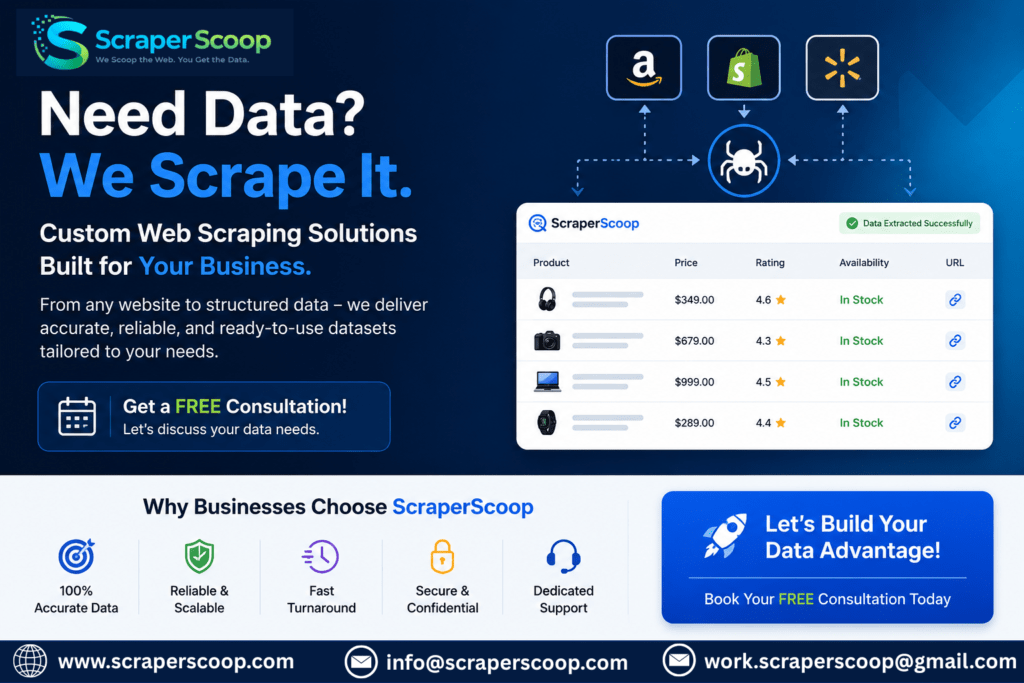
At ScraperScoop, we provide everything you need to turn the world’s web data into your competitive advantage:
- ✅ Custom Web Scraping Services tailored to your exact specifications
- ✅ Ready-Made Datasets across eCommerce, real estate, travel, food delivery & more
- ✅ Powerful APIs for seamless integration with your tech stack
- ✅ Analytics Dashboards that transform raw data into actionable insights
- ✅ Dedicated Support from a team of data extraction experts
Whether you’re looking to monitor competitor pricing, generate high-quality leads, track market trends, or build a complete data pipeline for your business — we’ve got you covered.
🚀 Let’s Talk About Your Data Needs
Don’t let your competitors outpace you with better data. Contact ScraperScoop now → and schedule your free consultation. Let’s build a custom data strategy that drives real growth for your business.
Conclusion: The Future Belongs to Data-Driven Businesses
Web scraping in 2026 isn’t just about collecting data — it’s about building an always-on competitive intelligence system that makes your business faster, smarter, and more resilient. The technology has matured, AI has made it more accurate and accessible than ever, and the businesses that embrace it are winning.
From eCommerce pricing intelligence and lead generation to real estate analytics and travel fare monitoring, the applications are vast and the ROI is proven. The gap between companies that invest in structured web data and those that don’t is widening every day.
Whether you’re just starting your data journey or looking to upgrade your existing scraping infrastructure, ScraperScoop is your trusted partner for accurate, structured web data tailored to your business needs.
The data is out there. The question is: are you using it?
👉 Get in touch with ScraperScoop and let’s turn web data into your biggest competitive advantage.
Frequently Asked Questions (FAQs)
What is web scraping and how does it work?
Web scraping is the automated process of extracting structured data from websites using specialized tools, scripts, or APIs. It works by programmatically visiting web pages, parsing the HTML content, and extracting specific data points into organized formats like CSV, JSON, or databases.
Is web scraping legal?
Web scraping of publicly available data is generally legal, but it’s important to comply with data privacy regulations like GDPR and CCPA, respect robots.txt files, and follow platform terms of service. Professional web scraping services like ScraperScoop operate within ethical and legal boundaries.
What industries benefit most from web scraping?
eCommerce, real estate, travel, finance, food delivery, healthcare, and AI technology are the leading industries benefiting from web scraping. Each uses structured web data for pricing intelligence, competitive analysis, lead generation, and strategic decision-making.
How can web scraping help with lead generation?
Web scraping can extract business contact information, company details, and contextual data from professional networks, directories, and industry databases — providing your sales team with fresh, targeted leads that convert better than generic purchased lists.
Why should I choose ScraperScoop for web scraping?
ScraperScoop offers custom web scraping services, ready-made datasets, APIs, and analytics dashboards across multiple industries. We deliver accurate, structured data tailored to your specific business needs, backed by compliance-first practices and dedicated expert support. Contact us to learn more.


