

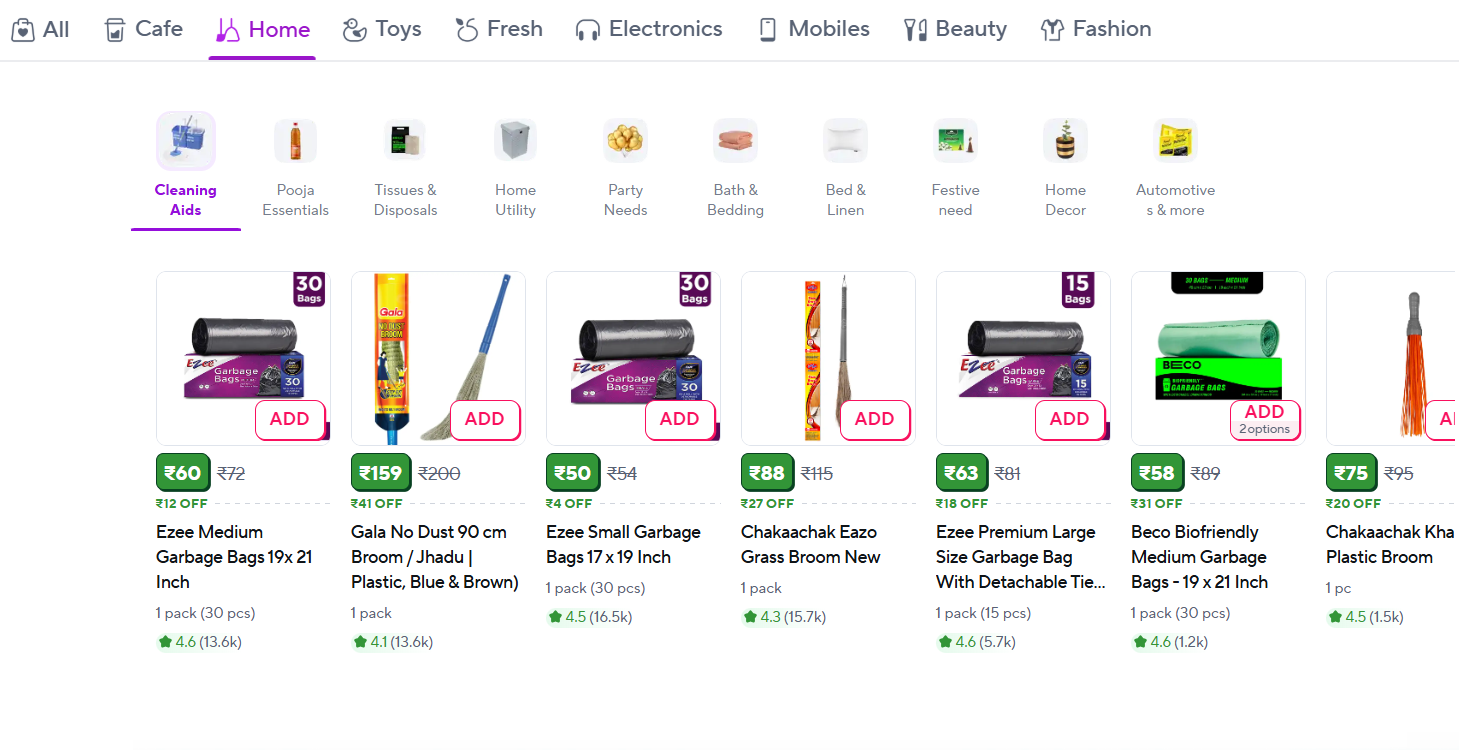
Product Price Scraping is a core capability within web scraping that focuses on collecting price data from online stores, marketplaces, and catalog pages. In today’s fast-moving e-commerce landscape, robust Product Price Scraping enables pricing intelligence, competitive benchmarking, and data-driven decisions that protect margins and unlock opportunities. By systematically gathering price points, stock status, and product identifiers, businesses can monitor market dynamics, detect price volatility, and respond with timely pricing or promotions. This is why a well-planned approach to Product Price Scraping, paired with reliable data extraction, is essential for modern pricing teams.
Why Product Price Scraping Matters
- Pricing intelligence: Track competitor prices to identify gaps, align your offers, and anticipate market shifts.
- Competitive benchmarking: Benchmark against top rivals to position your catalog with compelling value.
- Dynamic pricing readiness: Power pricing strategies that adapt to demand, seasonality, and promotions.
- Revenue optimization: Detect opportunities for margin protection and promotional events backed by data.
- Product catalog insight: Correlate price with features, variants, and availability across channels.
Effective Product Price Scraping goes beyond extracting prices. It encompasses data extraction routines that capture product names, SKUs, currency, unit measures, stock status, and timestamped records to enable historical trend analysis. With clean, normalized data, teams can build dashboards, alerts, and automated repricing workflows that align with business goals.
Planning Your Price-Scraping Project
Define objectives and success metrics
Start with clear goals: do you want weekly price snapshots for 5,000 SKUs, or real-time monitoring for a smaller set of flagship products? Establish success metrics such as data completeness (percentage of sources scraped), freshness (latency between price change and capture), and accuracy (consistency across sources). This foundation guides tool selection and process design.
Identify data sources and data points
Map target sources—retailers, marketplaces, brand sites, and catalog aggregators. For each source, define required fields: product title, product URL, price, currency, discount, stock status, variant attributes (size, color), and timestamp. Consider additional data like price history, seller ratings, and shipping estimates for richer insights.
Choose an approach: headless scraping vs API-first
Most organizations balance two approaches. Headless browser-based scraping excels for dynamic pages and anti-scraping defenses, while API-first data access is preferable when public or partner APIs exist. The right mix depends on source complexity, legality, and your maintenance budget. When possible, prefer stable APIs or official feeds to minimize risks.
Tooling and Architecture: Getting the Right Stuff
Tech stack essentials
A robust price-scraping system typically includes a crawler, a data extraction layer, a storage/warehouse, and a consumption layer (dashboards, alerts, or feeds). Popular components include:
- Crawlers and frameworks: Scrapy, Playwright, Puppeteer, Selenium, or a managed platform.
- Data extraction techniques: CSS selectors, XPath, and structured data extraction (JSON-LD, microdata).
- Storage: a data warehouse or data lake (e.g., Snowflake, BigQuery, Redshift) with appropriate schemas for price, currency, and timestamps.
- Orchestration and scheduling: Airflow, Prefect, or simple cron-based pipelines.
Spotlight on scraperscoop
Tools and platforms like scraperscoop can streamline source discovery, proxy management, and structured data extraction. A solution built around scraperscoop streamlines source vetting, rate limiting, and change-detection, reducing maintenance overhead while improving data quality. When evaluating tools, consider how they handle dynamic content, anti-bot measures, and compliance requirements.
Data extraction and normalization considerations
Consistency is key. Normalize price values to a single currency, align product identifiers (SKUs, GTINs), and standardize unit measurements. Normalize date/time to a common timezone and format to support reliable historical analysis. Handling variants (color, size, packaging) is essential to avoid price misalignment across SKUs.
Managing Challenges: Legal, Ethical, and Technical
Legal and policy considerations
Always respect robots.txt, terms of service, and any licensing agreements. When possible, use official APIs or partner data feeds. Implement a clear data governance policy to avoid misusing scraped data and to protect sensitive information. Legal compliance reduces risk and supports sustainable data operations.
Ethical scraping and responsible automation
Implement rate limiting, respectful time delays, and randomized intervals to minimize impact on target sites. Use IP rotation where appropriate, but avoid aggressive crawling that disrupts a site’s operations. Transparent disclosures and opt-out mechanisms in your data products help maintain trust with data sources and stakeholders.
Technical hurdles and mitigations
Sources frequently change layouts, causing brittle selectors. Build resilient extraction with robust selectors, fallback strategies, and regular source health checks. Implement monitoring and alerting for failures, data gaps, and price anomalies. Maintain versioned parsers and test suites to reduce downtime during site updates.
Data Architecture: From Extraction to Insight
Data model essentials
A reliable price dataset includes: source_id, source_name, product_id (or GTIN/SKU), product_title, price, currency, discount, stock_status, variant_attributes, capture_timestamp, and data_quality_flags. For historical analyses, store price history with event-level granularity and maintain lineage metadata to trace back to original sources.
Storage and pipelines
Adopt a modular pipeline: fetch → parse → validate → normalize → store → analyze. Implement data quality checks at each stage, including currency normalization, missing value handling, and cross-source reconciliation. Build downstream pipelines to feed dashboards, alerts, and repricing engines.
Quality assurance and governance
Regularly audit data samples, track drift in price and currencies, and validate against known benchmarks. Establish data stewardship roles and documentation for fields, coding conventions, and schema evolution. Good governance ensures reliable insights and regulatory compliance over time.
Use Cases, ROI, and Business Impact
- Pricing optimization: Use price history to identify optimal price bands, run promotions, and adjust margins without sacrificing competitiveness.
- Market benchmarking: Compare pricing across regions, brands, and channels to inform expansion or repricing strategies.
- Promotions and promotions planning: Align discounting with market movements and inventory levels for maximum impact.
- Channel strategy: Understand how different marketplaces price similar products and adapt channel-specific tactics.
ROI from Product Price Scraping comes from faster decision cycles, more accurate pricing, and the ability to react to competitor moves promptly. By investing in clean data extraction and robust pipelines, teams reduce manual effort and gain a scalable, auditable source of truth for pricing decisions.
Best Practices for Implementing a Price-Scraping Program
- Start small, then scale: Begin with a focused pilot on a limited catalog to validate data quality and workflow reliability before expanding.
- Prioritize data quality: Invest in normalization, deduplication, and validation to ensure reliable insights across sources.
- Automate governance: Enforce versioning for parsers and schemas, and maintain transparent data lineage.
- Monitor and alert: Set up real-time alerts for price outliers, sudden changes, or missing data, enabling quick remediation.
- Respect source constraints: Adhere to rate limits, adjust crawl schedules for off-peak times, and avoid overloading sites.
Getting Started: A Practical Roadmap
- Define your objectives, success metrics, and a slim, prioritized catalog for initial scraping.
- Map sources, assess access (HTML scraping vs APIs), and choose a tooling stack that aligns with your team’s skills and risk tolerance.
- Develop a modular extraction plan with robust selectors, normalization rules, and a scalable storage design.
- Implement governance, testing, and monitoring to ensure data quality and compliance over time.
- Launch the pilot, measure outcomes, and iterate based on learnings and business impact.
What to Look for in a Price-Scraping Partner or Solution
- Reliability and uptime: A solution that maintains data freshness and minimizes downtime is essential for pricing decisions.
- Scalability: The ability to scale to thousands of SKUs and dozens of sources without a dramatic increase in maintenance effort.
- Data quality capabilities: Strong normalization, deduplication, currency handling, and variant mapping.
- Compliance and ethics: Clear policies around data usage, rate limits, and source respect to reduce risk.
- Support for your workflow: Integration with ETL pipelines, dashboards, and alerting systems.
Conclusion: Elevate Your Pricing Strategy with Systematic Price Scraping
Product Price Scraping, when implemented with a thoughtful data extraction strategy, unlocks powerful pricing intelligence. By combining reliable data collection, rigorous normalization, and actionable insights, you can monitor market movements, optimize pricing, and drive competitive advantage. With tools like scraperscoop and a structured approach to web scraping, you’ll build a sustainable pipeline that supports pricing decisions, merchandising strategies, and revenue growth.
If you’re ready to transform your pricing capabilities, start with a focused pilot and map your data flow end-to-end. Our team can help you design a scalable price-scraping program, integrate it with your data stack, and deliver clean, timely insights. Contact us to discuss your needs, set realistic timelines, and begin building your pricing intelligence today.
Request a free consultation
Ready to unlock the power of data?


