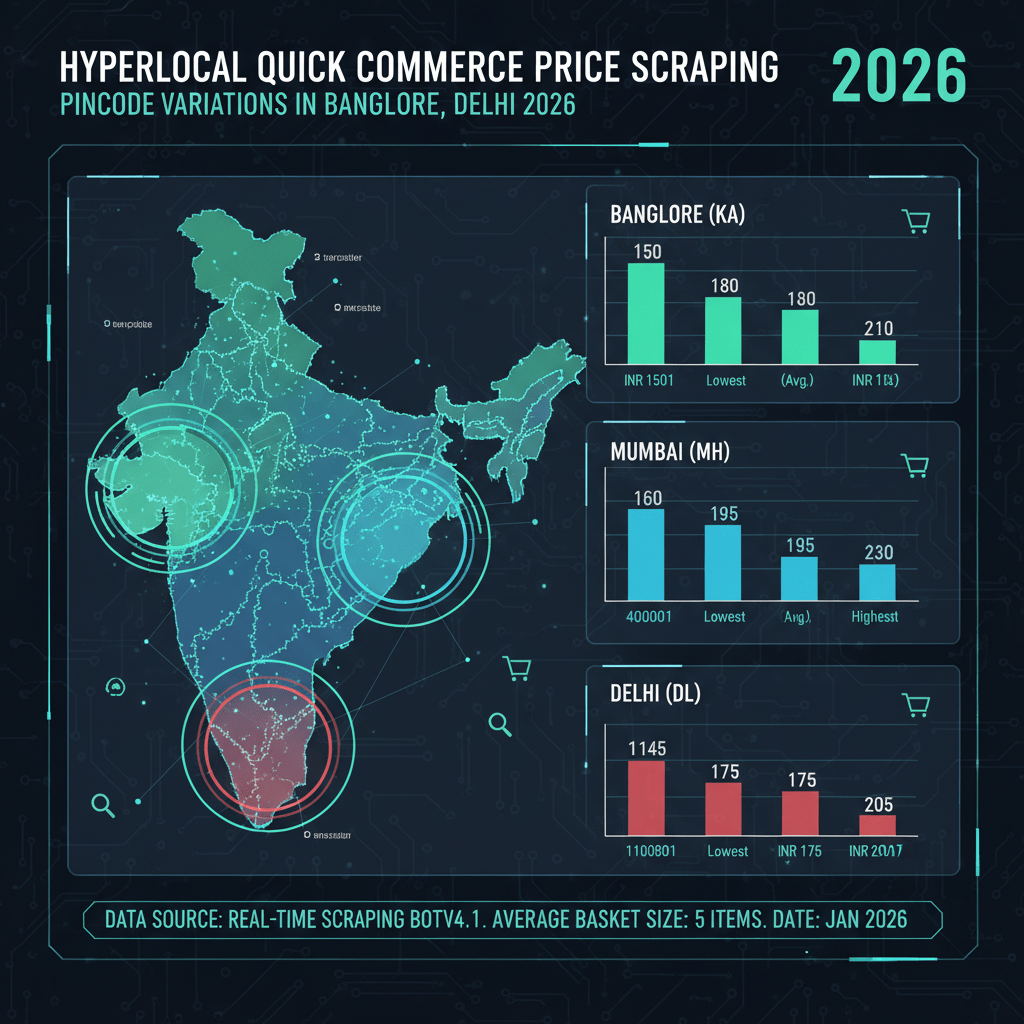


Competitor price scraping is a cornerstone of modern pricing strategy. By systematically collecting competitor prices, product SKUs, and catalog data from public sources, teams gain actionable insights and the ability to respond quickly. This practice, often part of a broader pricing intelligence program, helps businesses optimize margins, stay competitive, and forecast market movements. In this guide, we dive into the what, why, and how of competitor price scraping, along with practical workflows, tools, and best practices to turn raw data into meaningful data insights.
What is competitor price scraping?
Competitor price scraping refers to the automated collection of pricing data from competitor websites, marketplaces, and catalogs. The goal is to build a structured dataset that reveals price levels, discounting patterns, promotions, and availability across products and categories. This enables pricing teams to benchmark themselves against rivals, monitor price changes over time, and test hypotheses about price elasticity in real markets. In practice, competitor price scraping involves:
- Identifying target products and SKUs that align with your catalog
- Capturing price points, discounts, and out-of-stock indicators
- Normalizing data to account for currency, unit measures, and bundle configurations
- Storing data in a centralized data warehouse or data lake for analysis
The end result is a dynamic view of the competitive landscape that supports data-driven decisions and faster responsiveness in pricing, promotions, and assortment planning.
Why price scraping matters for pricing strategy
Price scraping delivers a direct signal about market dynamics. When used responsibly, it informs several critical areas of pricing strategy:
Pricing benchmarks: Set baseline price floors and ceilings by understanding competitor ranges across similar SKUs.
Dynamic pricing enablement: Respond to price shifts in near real time or on a cadence that aligns with your market pace.
Promotion planning: Detect promotional spikes and adjust your own campaigns to avoid price wars or missed opportunities.
Channel pricing consistency: Ensure that prices remain coherent across channels, preventing cannibalization or channel conflict.
Margin optimization: Balance competitive positioning with margin targets by analyzing price-to-cost ratios and discount depth.
Product lifecycle intelligence: Track how pricing evolves with new product introductions, line extensions, or end-of-life moves. In addition, price scraping supports broader data insights such as elasticity estimates, demand signals, and inventory health indicators by correlating price movements with stock levels and conversion data.
Distinctions: price scraping vs web scrapping vs data extraction
Understanding terminology helps set expectations for scope and method:
Price scraping: A focused subset of data extraction aimed at pricing data. The core objective is to collect current and historical prices, discounting, and promotional offers for specific products.
Web scrapping (as used in some contexts): A colloquial variant for scraping information from the web. While often used interchangeably with price scraping, it is broader and may cover non-price data like product descriptions, reviews, and availability.
Data extraction: The overarching process of collecting, cleaning, and structuring data from various sources. Price scraping is a specialized application of data extraction focused on pricing.
Data insights: The value derived from data after processing, analyzing, and visualizing it to support decision-making. To maximize impact, teams typically combine price scraping with data extraction pipelines, normalization rules, and visualization dashboards to produce actionable data insights.
Ethical and legal considerations
Responsible price scraping requires adherence to legal, contractual, and ethical boundaries. Key considerations include:
Terms of service: Respect website terms, robots.txt directives, and anti-scraping protections. When in doubt, seek permission or use official APIs where available.
Rate limiting and civility: Scrape with conservative request rates to avoid harming target sites or triggering blocks.
Data ownership and privacy: Avoid harvesting personal data or proprietary internal data from competitors where not publicly available.
Compliance and governance: Maintain documentation of data sources, consent where applicable, and a clear policy for data usage.
IP and licensing: Be mindful of copyrighted material such as product images, descriptions, or trademarks that may be protected. Legal and ethical considerations are not just risk management; they also influence data quality, reliability, and long-term sustainability of your price scraping program.
The price scraping workflow: sources, collection, normalization, validation
A robust workflow turns raw data into reliable, decision-grade insights. A typical end-to-end process includes:
1) Source discovery
- Identify primary competitors and marketplaces
- Map product matching rules (SKUs, product families, synonyms)
- Determine update cadence (real-time, hourly, daily)
2) Data collection
- Web scraping scripts, headless browser automation, or API-based pulls
- Capture prices, promotions, stock status, currency, unit measures, and product attributes
- Implement anti-blocking strategies judiciously (see Proxies and infrastructure)
3) Data normalization
- Standardize currencies, units, and product identifiers
- Align price formats (retail vs discounted price, MSRP, sale price)
- Deduplicate and reconcile similar SKUs across sources
4) Validation and quality checks
- Detect anomalies (outliers, sudden spikes)
- Verify data freshness and source credibility
- Implement audit trails and change logs
5) Storage and accessibility
- Store in a scalable warehouse or data lake
- Provide structured schemas for easy querying (price, date, source, SKU, channel)
6) Analysis and visualization
- Build dashboards for price movement, coverage, and concentration
- Run elasticity tests and compare against internal pricing benchmarks
7) Governance and refresh
- Define data retention policies
- Schedule periodic reviews of sources, rules, and quality metrics
Tools and technologies for price scraping
A modern price scraping program combines several technology layers:
- Scraping frameworks and libraries
- Python-based libraries for web scraping and data extraction
- Headless browsers (e.g., Selenium, Playwright) for dynamic content
- XPath/CSS selectors and robust parsing strategies
- Data processing and storage
- ETL/ELT pipelines to transform and load data
- Data warehouses (e.g., Snowflake, BigQuery) or data lakes (e.g., S3, ADLS)
- Versioned data stores to track changes over time
- Data quality and enrichment
- Normalization routines for currency, units, and promotions
- Enrichment with market data, category taxonomy, and currency conversion
- Infrastructures and operations
- Proxies, VPNs, and IP rotation to avoid blocks while respecting terms
- Scheduling and orchestration (Airflow, Prefect) for reliability
- Monitoring, alerting, and observability for uptime and data freshness
- Security and compliance
- Credential management, secure storage of credentials
- Compliance tooling to track data provenance and usage rights
Scrapers and frameworks
Open-source options: robust scraping libraries with active communities
Commercial platforms: turnkey price scraping capabilities, built-in source connectors, and monitoring
Custom pipelines: tailored to specific product catalogs, currencies, and regional requirements When selecting tools, prioritize reliability, source compatibility, and the ability to scale as price volatility and catalog breadth grow.
Proxies and IP management
Importance: Several sites employ anti-bot measures that require responsible IP rotation.
Options: residential proxies, data center proxies, or cloud-based footprints
Best practices: rotate IPs, space requests to mimic human patterns, and respect robots.txt; ensure compliance with terms of service
Verification: implement safeguards to detect blocked sources and switch to alternatives
Data extraction and data insights
Data extraction is the backbone of a successful price scraping program. It yields clean, structured data ready for insights that fuel pricing decisions.
- Data extraction basics
- Define data schemas: source, product identifier (SKU), price, currency, discount, stock status, timestamp, and channel
- Normalize product attributes: category, brand, model, color, size
- Data transformation and enrichment
- Currency normalization and exchange rate application
- Price normalization (list price, sale price, final price, bundle pricing)
- Enrichment with market context: seasonality, promotions, and regional variations
- Data insights for pricing
- Price dispersion: how widely prices vary for similar SKUs
- Price trajectory: historical price movements and velocity
- Promotions and discount patterns: frequency, depth, and duration
- Competitor pricing gaps: identifying opportunities for competitive differentiation
- Data quality considerations
- Source credibility and recency
- Handling missing values and outliers
- Data versioning and lineage for reproducibility
Building a price monitoring system
A formal price monitoring system turns data into timely alerts and actionable dashboards.
- Frequency and cadence
- Align scraping frequency with market dynamics and product lifecycle
- Critical items may require hourly updates; evergreen items may be daily
- Alerts and thresholds
- Price drop or surge alerts
- Significant deltas vs. baseline or competitors
- Stock changes and availability shifts
- Dashboards and reporting
- Price heatmaps by category, region, and channel
- Trend lines showing price evolution for top SKUs
- Coverage metrics: how many competitors and channels are monitored
- Workflow integration
- Feed insights into pricing engines, promotion planning, and assortment decisions
- Integrate with CRM and BI tools for cross-functional visibility
Use cases by industry
- Retail and e-commerce
- Competitive pricing analysis to optimize promotions and price tiers
- Channel pricing alignment to prevent cannibalization
- Consumer electronics
- Monitoring MSRP vs street price and discounting
- Apparel and fast-moving consumer goods
- Adapting to flash sales, seasonal promotions, and supply constraints
- Travel and hospitality
- Dynamic pricing signals for demand-based pricing and offer optimization
These use cases illustrate how competitor price scraping translates into tangible actions, from adjustments to the pricing calendar to targeted promotions that protect margins while remaining competitive.
Best practices and common pitfalls
- Data governance
- Maintain source documentation and data lineage
- Regularly review data quality metrics and source reliability
- Source diversity
- Rely on a mix of sources to avoid bias and gaps
- Include both direct retailer data and marketplaces where appropriate
- Matching accuracy
- Implement robust product matching rules to avoid misalignment across sources
- Use fuzzy matching and attribute weighting to improve accuracy
- Frequency vs stability
- Balance freshness with stability; overly aggressive scraping can cause noise
- Use a tiered approach: core SKUs refresh more often than niche items
- Scalability and maintainability
- Design modular pipelines with clear interfaces
- Invest in monitoring, tests, and automated health checks
- Ethical and legal mindfulness
- Always respect terms of service and data usage rights
- Document compliance decisions and source provenance
Integrating with Scraperscoop
Scraperscoop offers a comprehensive approach to data extraction and price scraping, helping teams accelerate setup, governance, and insights. Key benefits include:
Centralized data extraction workflows tailored for price scraping
Built-in normalization, enrichment, and quality checks to ensure reliable data
Scalable architecture that supports growing catalogs and multiple regions
Dashboards and insights that translate raw data into pricing actions
Seamless integration with your data warehouse and BI tools To maximize impact, align Scraperscoop’s capabilities with your price monitoring goals:
Define target sources, SKUs, and attributes for collection
Establish a cadence that matches market dynamics and internal planning cycles
Create alerting rules for price changes, promotions, and stock status
Build data workflows that feed directly into pricing engines, promotions, and channel strategies
Challenges you may encounter and how to address them
- Anti-scraping defenses
- Use respectful scraping patterns, rotating IPs, and compliant access methods
- Prefer official APIs or partner data feeds when available
- Data quality issues
- Implement automated validation, deduplication, and anomaly detection
- Maintain source-level confidence scores and data provenance
- Currency and regional variations
- Normalize currencies with up-to-date exchange rates
- Handle regional VAT, tax, and pricing conventions
- Data latency
- Balance freshness with reliability; use staged updates and backlog processing
- Monitor for source outages and have contingency plans
- Scalability
- Design modular pipelines and use cloud-native storage and compute
- Plan for growth in SKUs, regions, and channels
Sample price scraping workflow blueprint
Define objectives: pricing benchmarks, elasticity estimates, and promotional insights
List sources: target competitors, marketplaces, and regional retailers
Identify SKUs and attribute mapping
Build data collection modules with rate-limiting and error handling
Normalize and enrich data (currency, unit, promotions)
Validate data quality, reconcile duplicates, and maintain versioning
Store in a centralized data repository
Create dashboards for monitoring and alerting
Schedule ongoing reviews and governance checks
FAQ: common questions about competitor price scraping
Is competitor price scraping legal?
It depends on the source and compliance with terms of service. Always review terms, seek permission when necessary, and use APIs if available.
How often should I scrape prices?
It depends on market dynamics. Fast-moving categories may require hourly updates; stable catalogs may be daily or weekly.
What metrics matter most for pricing decisions?
Price dispersion, trajectory, discount depth, frequency of promotions, stock status, and channel coverage.
Can scraping replace market research?
Scraping complements market research by providing timely, actionable data, but it should be integrated with broader insights from surveys, consumer data, and internal performance metrics.
How do I ensure data quality at scale?
Use automated validation, source credibility scoring, anomaly detection, and data lineage tracking. Regular audits help maintain reliability.
Conclusion: turning price data into competitive advantage
Competitor price scraping is not just about collecting numbers; it is about turning those numbers into strategic decisions. When embedded in a robust data pipeline with strong governance, this practice yields data insights that inform pricing, promotions, and product strategy. By combining disciplined data extraction, thoughtful matching, and proactive monitoring, teams can optimize margins, defend market share, and stay ahead in a dynamic competitive landscape.
If you’re ready to elevate your pricing intelligence program, explore how Scraperscoop can streamline data extraction, normalization, and insights generation for competitor price scraping. Start with a clear source map, define your SKU matching rules, and set up dashboards that translate price movements into action across pricing, merchandising, and growth initiatives.
Take the next step: Request a demonstration of Scraperscoop to see how a structured price scraping workflow can integrate with your existing data stack.
Want to go deeper? Schedule a workshop to align on targets, data sources, and governance for your price monitoring program.
Ready to begin? Create a pilot project focusing on a defined product category, a handful of key competitors, and a clear success metric to validate your approach.
By embracing a disciplined, transparent, and scalable approach to competitor price scraping, your organization can gain timely price insights, optimize pricing decisions, and sustain competitive advantage in a volatile market.
Get Your Competitor Price Scraping.
Ready to unlock the power of data?