

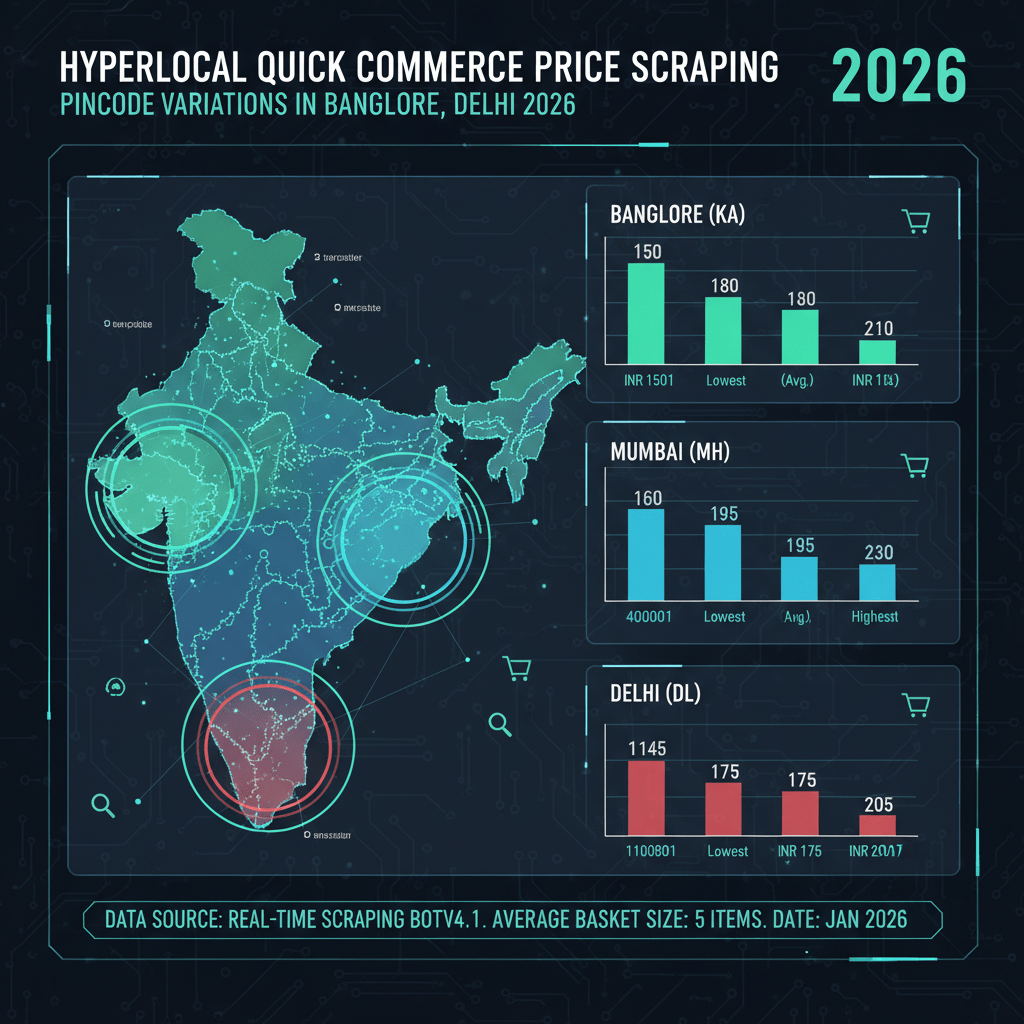
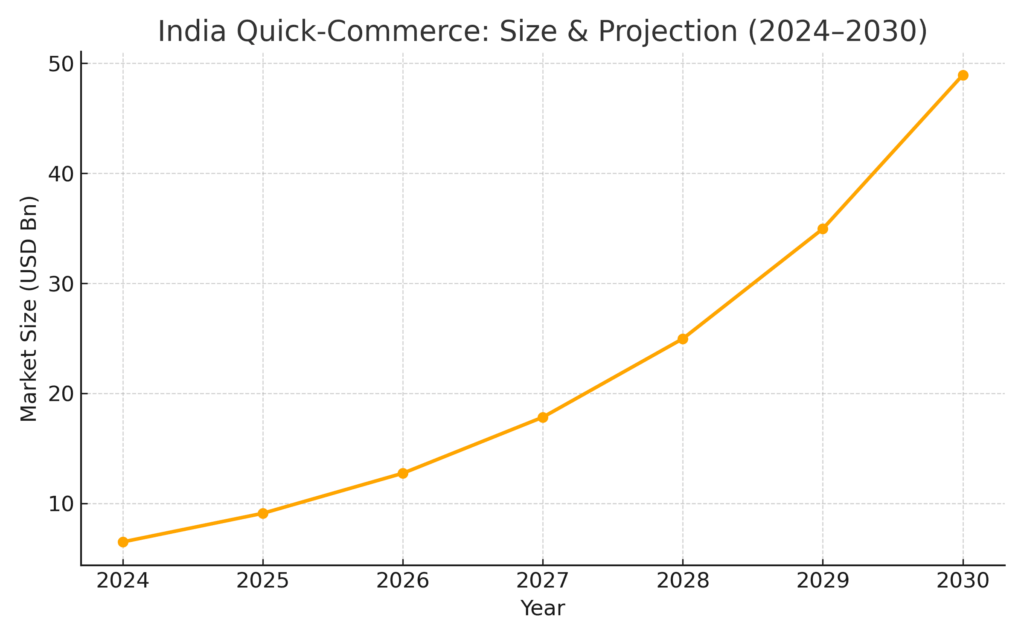
India’s quick commerce sector has revolutionized urban retail, with platforms like Zepto, Blinkit, and Swiggy Instamart delivering groceries and essentials in under 20 minutes. As of 2026, the market’s gross merchandise value (GMV) stands at approximately US$6.94 billion, according to Statista, with a projected compound annual growth rate (CAGR) of 12.41% through 2030. This explosive growth is driven by hyperlocal strategies, where pricing isn’t uniform but varies significantly by pincode due to factors like local demand, competition, logistics costs, and real-time promotions.
In cities like Bangalore, Mumbai, and Delhi NCR—which account for over 60% of quick commerce orders—understanding these variations is crucial for brands and retailers. At ScraperScoop, we specialize in ethical web scraping to extract pincode-level data, helping businesses optimize pricing, detect arbitrage opportunities, and forecast demand. This comprehensive guide delves into the mechanics of hyperlocal pricing, key data extraction methods, platform-specific insights, compliance considerations, and real-world applications, all backed by the latest market data.
The Evolution of Hyperlocal Pricing in India’s Quick Commerce Landscape
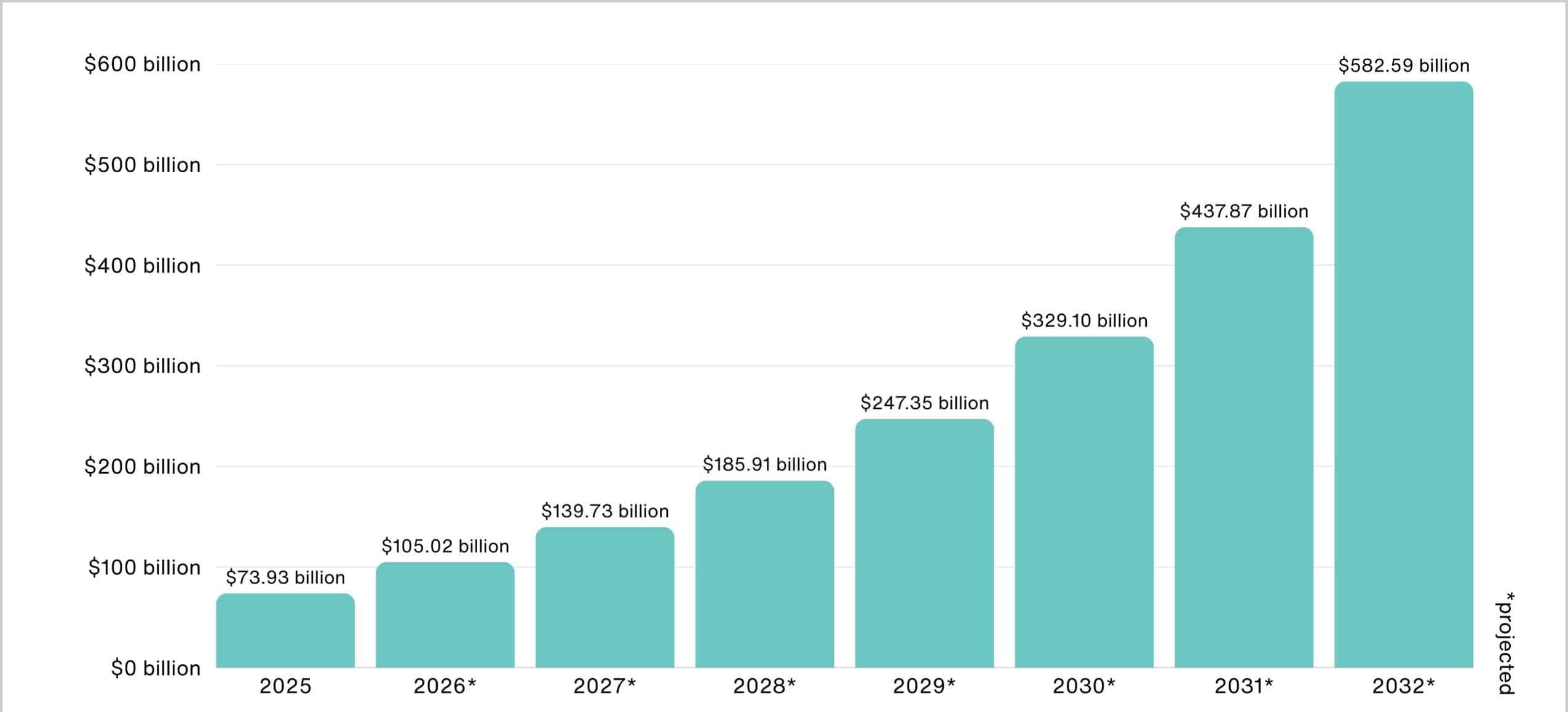
Quick commerce in India has grown from a niche service to a multi-billion-dollar industry. Bain & Company reports that the e-retail market, including quick commerce, surged to $60 billion in GMV in 2025, with quick commerce contributing significantly. By 2026, Mordor Intelligence estimates the Indian quick commerce market at USD 3.65 billion, projected to reach USD 6.64 billion by 2031 at a CAGR of 12.74%.
Hyperlocal pricing emerges from the need to balance speed and profitability. Platforms operate dark stores—micro-warehouses—in high-density areas, leading to price differences of 10-30% across pincodes. For instance, in Bangalore’s Indiranagar (560038), premium products might be discounted more due to high competition, while in Whitefield (560066), base prices could be higher owing to longer supply chains. Similar patterns appear in Mumbai’s Bandra (400050) vs. Navi Mumbai (400703), and Delhi’s Gurgaon (122001) vs. Noida (201301).
Inc42 notes that in 2026, platforms are adding 2,000-2,500 new dark stores, intensifying hyperlocal competition. This density allows for millisecond-level price adjustments based on real-time data, as highlighted in ET Edge Insights.
Why Pincode-Level Data Scraping is Essential for Competitive Edge
Traditional market reports provide city-level averages, but hyperlocal variations reveal true opportunities. For example, ScraperScoop’s analysis shows average price variations of 12% across platforms for essentials, with higher fluctuations in Tier-2 cities like Ahmedabad in Gujarat, where quick commerce penetration is growing rapidly.
Scraping enables:
- Dynamic Pricing Optimization: Adjust prices in real-time to match competitors.
- Arbitrage Identification: Spot where the same product is cheaper in adjacent pincodes.
- Demand Forecasting: Predict surges in high-value zones like Mumbai’s South Bombay.
- Inventory Management: Avoid stockouts in demand-hotspots like Delhi’s South Extension.
| Use Case | Benefit | Example in 2026 | Data Source |
|---|---|---|---|
| Price Matching | 15-20% sales uplift | Bangalore: Match Zepto’s flash deals in Koramangala | Pincode-scraped data |
| Arbitrage | Cost savings of 10-15% | Mumbai: Buy low in Andheri, sell high in Powai | Real-time Blinkit scraping |
| Forecasting | Reduced waste by 25% | Delhi: Predict festive spikes in Connaught Place | Historical trends from Instamart |
| Expansion | Targeted growth | Ahmedabad: Identify untapped pincodes like Satellite | Multi-platform analysis |
Platform-Specific Hyperlocal Trends: Zepto vs. Blinkit vs. Instamart
Each platform has unique pricing behaviors:
Zepto: Known for aggressive experiments, with price changes every few hours. In 2026, Zepto’s dark store model leads to 20% more frequent variations in high-density areas like Bangalore’s MG Road.
Blinkit: Offers stable pricing but deeper discounts in suburbs. Instagram insights from FoodDataScrape show Blinkit refreshing prices faster than competitors.
Swiggy Instamart: Ties promotions to food orders, leading to bundle-based variations. In Mumbai, prices can drop 15% during peak hours.
Ethical Scraping Techniques and Compliance in 2026
With India’s Digital Personal Data Protection Act (DPDPA) in effect, ethical scraping is paramount. We use rotating proxies, rate limiting, and API-style extraction to comply with terms of service. Avoid overloading servers—focus on public, non-personal data.
Best practices include:
- Respect robots.txt files.
- Use human-like request patterns.
- Conduct regular compliance audits.
Case Studies: Real-World Wins from Hyperlocal Insights
In Bangalore, a FMCG brand used our scraped data to adjust prices in HSR Layout, boosting sales by 18%. In Ahmedabad, similar strategies helped target emerging markets amid Gujarat’s growing quick commerce adoption.
Building Your Hyperlocal Scraping Pipeline with ScraperScoop
Our solutions provide daily updates on prices, stocks, and promotions across 1000+ pincodes. Integrate with dashboards for alerts on significant variations.
Request a free consultation
Ready to unlock the power of data?
Published: February 2026 | Category: Quick Commerce, Hyperlocal Insights