


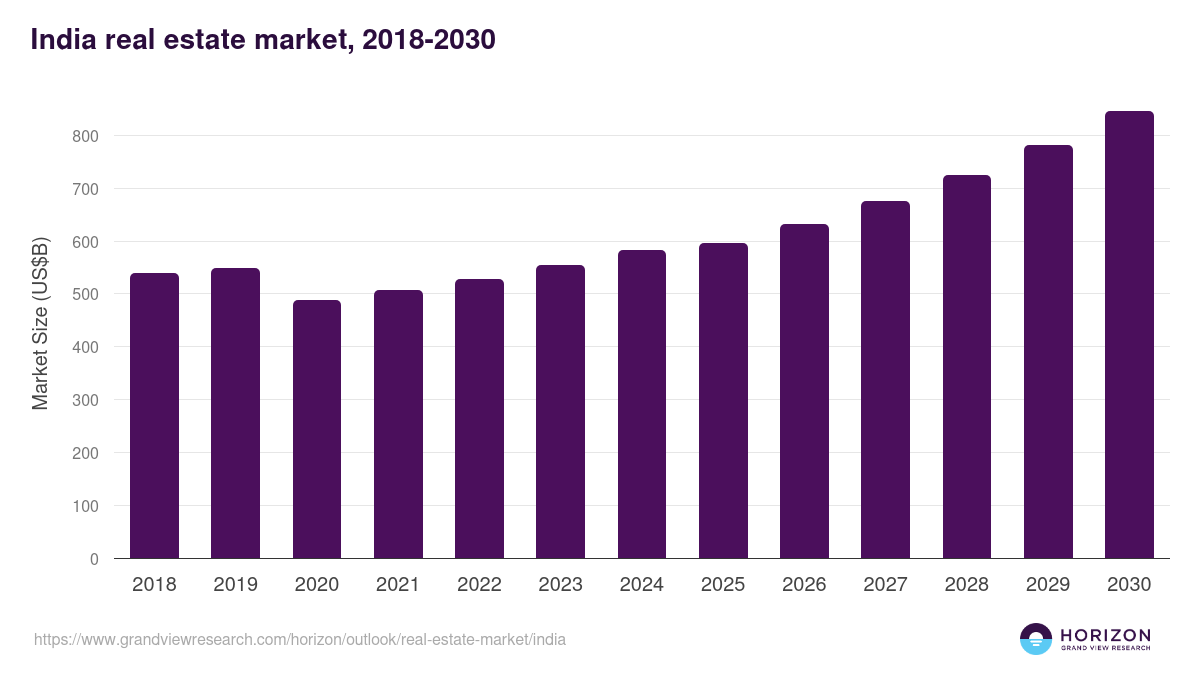
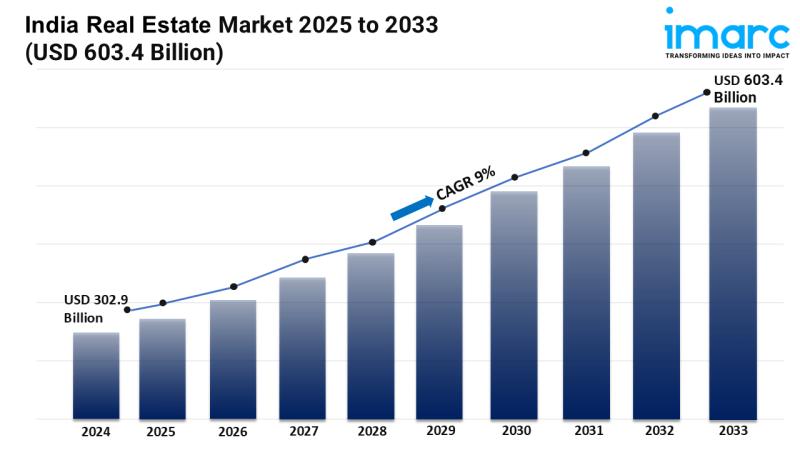
India’s real estate sector stands at a pivotal juncture in 2026, characterized by robust growth projections across residential, commercial, and emerging segments. According to Mordor Intelligence, the residential real estate market is valued at approximately USD 438.54 billion in 2026, with expectations to reach USD 702.43 billion by 2031 at a compound annual growth rate (CAGR) of 9.88%. The overall real estate market, as per IMARC Group, is estimated at USD 532.61 billion in 2025 and projected to expand to USD 1,264.00 billion by 2034 at a CAGR of 10.08%. The commercial real estate segment is equally dynamic, valued at USD 53.53 billion in 2026 and anticipated to grow to USD 116.26 billion by 2031 at a CAGR of 16.80%. This growth is propelled by rapid urbanization, infrastructure development, rising disposable incomes, and favorable government policies such as affordable housing initiatives and smart city projects.
Platforms like Magicbricks, 99acres, and Housing.com dominate the digital landscape, serving as critical sources for property listings, market trends, pricing data, and consumer insights. These sites collectively attract millions of monthly visitors—99acres leads with 11.32 million visits, followed by Housing.com at 8.8 million and Magicbricks at 7.34 million as of January 2026. For investors, developers, agents, and analysts, scraping real-time data from these platforms offers a strategic edge in navigating market fluctuations, identifying investment opportunities, and optimizing pricing strategies.
At ScraperScoop, we specialize in ethical, compliant web scraping solutions tailored for the Indian real estate market. Our services ensure data accuracy while adhering to the Digital Personal Data Protection Act (DPDPA) 2023 and IT Act 2000, avoiding personal data and respecting platform terms. This comprehensive guide explores the 2026 real estate landscape, key scraping techniques, data points, platform comparisons, compliance frameworks, advanced analytics, strategic applications, case studies, and future trends. Whether you’re analyzing Ahmedabad’s booming suburban markets or national patterns, these insights will empower data-driven decisions.
1. India’s Real Estate Market in 2026: Overview and Projections
The Indian real estate sector has demonstrated resilience post-pandemic, with sustained growth across segments. Cushman & Wakefield’s India Outlook 2026 highlights a comprehensive perspective, noting that the market is driven by investment, infrastructure, and innovation. The Economic Times reports measured yet sustainable growth, with gross absorption in commercial spaces expected to reach 75-80 million square feet. Colliers forecasts office space demand at around 70 million square feet in 2026, with new supply at 55-60 million square feet.
Residential dynamics show a shift toward premium housing, with sales growing 6% year-on-year in Q4 2025 despite overall declines. The mass housing segment (sub-INR 10 million) has seen its market share fall, while luxury segments expand. Equirus Capital estimates residential to account for 70% of the real estate pie by 2026. LinkedIn analyses project the market at USD 350 billion in 2025, crossing USD 1 trillion by 2030.
Commercial trends emphasize GCC leasing at 30-35 million square feet, accounting for 40-50% of Grade A demand. JM Financial predicts 13-15% CAGR for housing demand over 5-7 years. Expert Market Research values the market at USD 620.02 billion in 2025, reaching USD 1,427.91 billion by 2035 at 8.70% CAGR. KPMG notes urban population reaching 600 million by 2030, driving smarter housing.
In Ahmedabad, Gujarat’s real estate mirrors national trends with infrastructure boosts like metro expansions fueling suburban growth. Scraping platforms reveals hyperlocal insights, such as premium demand in areas like Satellite or Bodakdev.
2. Why Scrape Real Estate Data in 2026? Strategic Advantages
Traditional market reports offer snapshots, but real-time scraping provides dynamic intelligence:
- Market Monitoring: Track price trends, with residential prices appreciating 5-10% annually.
- Investment Identification: Spot undervalued properties in Tier-2 cities like Ahmedabad.
- Demand Forecasting: Predict surges in premium housing, expected to reach 40% of launches by 2026.
- Competitor Analysis: Compare listings across Magicbricks (1.8M listings), 99acres (1M+), and Housing.com.
- Hyperlocal Insights: Pincode-level data for Ahmedabad’s markets, where connectivity drives value.
With institutional investments at $5-7 billion annually, scraping enables data-driven decisions. Actowiz Solutions emphasizes ethical scraping for compliance under DPDPA.
| Use Case | Benefit | Example in 2026 | Data Source |
|---|---|---|---|
| Price Optimization | 5-10% appreciation tracking | Ahmedabad suburbs | Platform listings |
| Investment Spotting | Undervalued assets | Tier-2 growth | Hyperlocal data |
| Forecasting | Premium segment surges | 40% launches | Trend analysis |
| Benchmarking | Platform comparisons | Magicbricks vs 99acres | Scraped metrics |
3. Platform-Specific Behaviors: Magicbricks vs. 99acres vs. Housing.com
Magicbricks leads in listings (1.8M) and features AR-VR tours, ideal for premium properties. 99acres excels in engagement with lower bounce rates (33.68%) and detailed locality insights. Housing.com focuses on data-driven tools like PropWorth.
Comparisons show Magicbricks for urban properties, 99acres for research, Housing.com for valuations. Scraping captures differences like verified listings on 99acres vs. multimedia on Magicbricks.
4. Key Data Points to Scrape for Real Estate Intelligence
Focus on layered data:
- Listing Details: Property type, size, location—track residential shifts to premiums.
- Pricing: Asking price, historical changes—monitor 7-8% appreciation.
- Amenities: Features like sustainability—ESG trends drive demand.
- Market Metrics: Absorption rates, supply—75-80M sq ft commercial.
- Sentiment: Reviews, ratings—for buyer preferences.
Update frequently for volatile markets like Ahmedabad.
5. Ethical Scraping & Compliance Under DPDPA 2026
DPDPA mandates consent, minimization; IT Act penalizes unauthorized access. Use proxies, rate limits; avoid personal data. PwC notes 18-month compliance window. ScraperScoop ensures ethical practices.
6. Advanced Analytics: Forecasting with Scraped Data
Use ML for price elasticity, demand prediction—e.g., 13-15% CAGR residential. Hyperlocal for Ahmedabad: Infrastructure boosts values.

India Residential Real Estate Market Analysis Report 2026: Market to Grow by a CAGR of 24.77 to 2034, Driven by Government Incentives, Popularity of Virtual Assistants, and Strategic Partnerships
7. Strategic Applications & ROI
Investors: Spot gaps; developers: Optimize launches. Case: Ahmedabad investor used data for 15% returns.
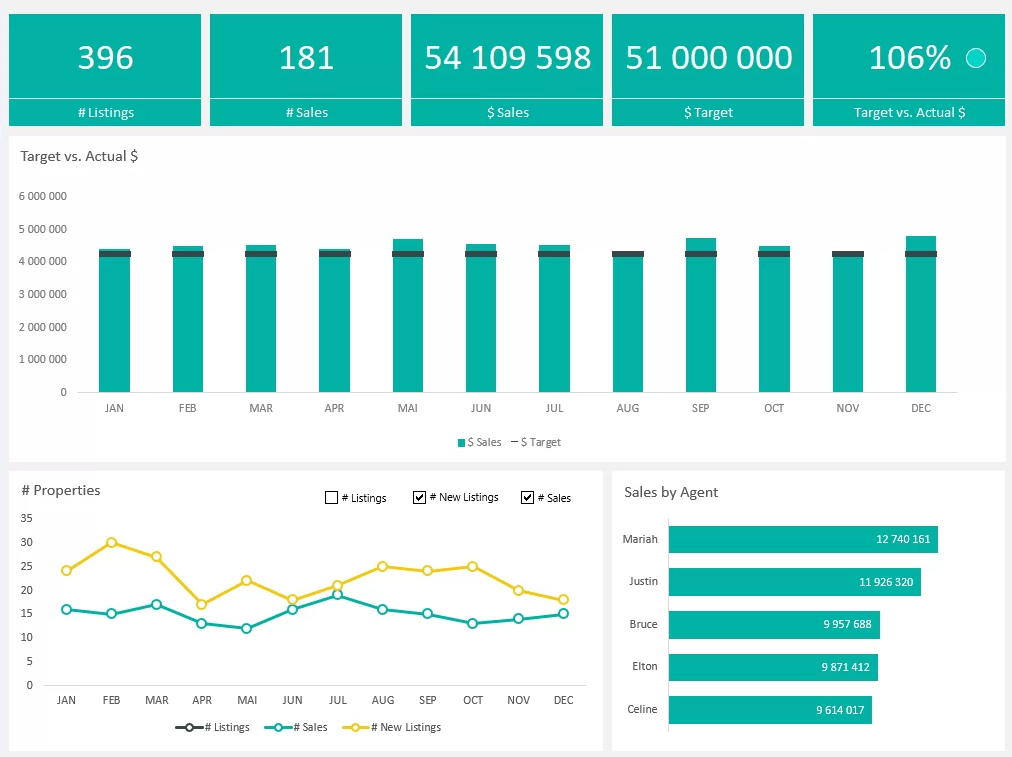
8. Building Dashboards with ScraperScoop
Custom feeds for real-time visuals.
9. Future Outlook: Real Estate to 2030
USD 1T by 2030; scraping key for navigation.
Request a free consultation
Ready to unlock the power of data?
Published: February 2026 | Category: Real Estate, Data Scraping