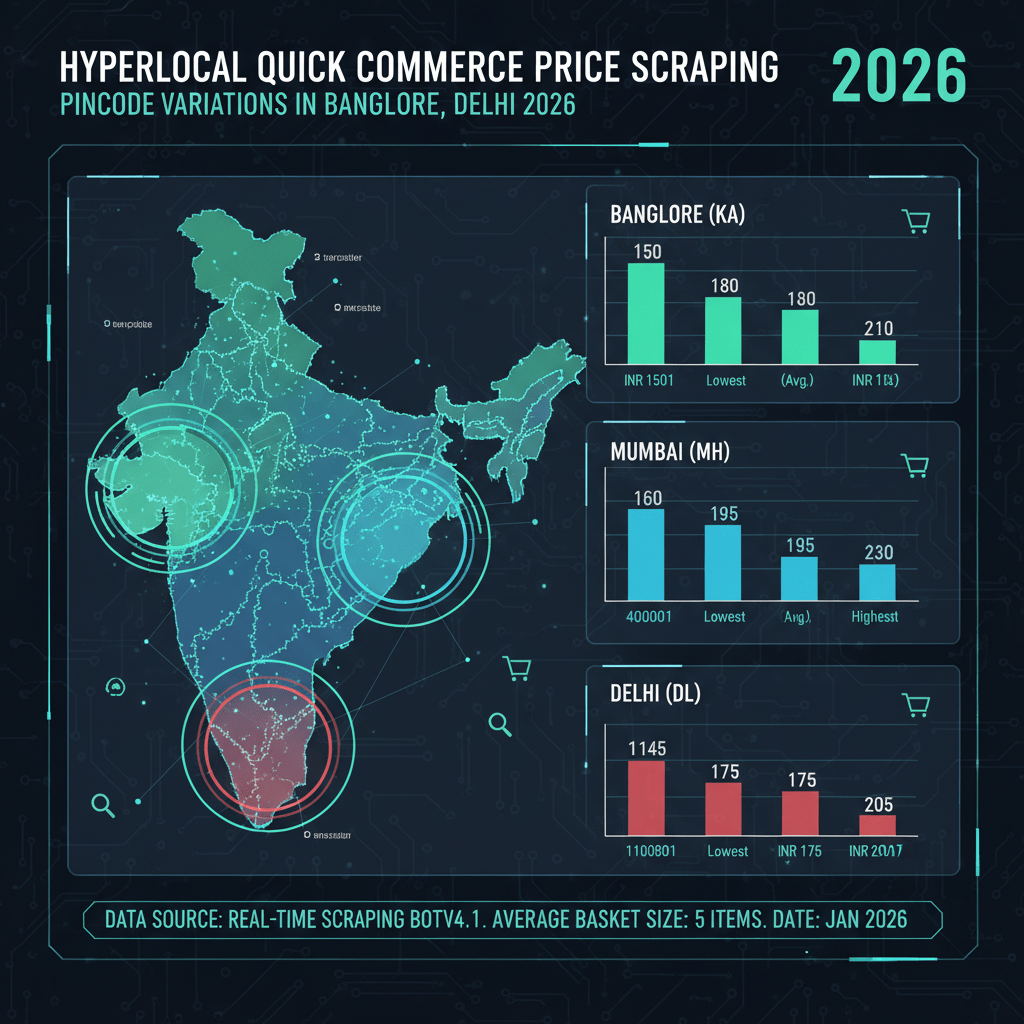


In the fast-paced world of online retail, Zepto API product data serves as the backbone for data-driven decision making. By providing structured access to product catalogs, variants, pricing, availability, and sales signals, Zepto API product data enables teams to align merchandising, operations, and marketing with tangible business outcomes. This article digs into what Zepto API product data is, why it matters, how it’s structured, and how to leverage it to surface actionable insights, including a focus on Top-Selling Products.
Understanding Zepto API product data
Zepto API product data refers to the digital payload that powers a retailer’s understanding of the product universe across channels. It typically includes product identifiers (SKUs, GTINs), names, descriptions, categories, attributes, images, pricing, promotions, stock levels, sales velocity, and variant information. Accessing this data through a robust API allows teams to synchronize internal systems (ERP, WMS, PIM, OMS) with external touchpoints (marketplaces, mobile apps, web storefronts) in real time or near real time.
What makes Zepto API product data valuable?
- Real-time visibility: Monitor stock, price, and promotions as they change.
- Consistent catalog across channels: Ensure uniform product representations to improve conversion and reduce returns.
- Data-driven merchandising: Use sales signals to optimize assortments and placements.
- Agility and automation: Drive workflows from data events, reducing manual intervention. As you integrate Zepto API product data into your tech stack, you’ll encounter core data domains that typically map to business goals: catalog enrichment, pricing strategy, inventory optimization, and revenue forecasting. The primary benefit is turning disparate signals into a cohesive picture of product performance.
Why Zepto API product data matters for e-commerce
- For e-commerce teams, the ability to access accurate, timely product data directly impacts customer experience and profitability. Zepto API product data supports several high-impact use cases:
- Top-Selling Products analysis: Identify which SKUs are driving revenue, why they outperform others, and how to allocate shelf space or advertising spend accordingly.
- Inventory health and replenishment: Align stock levels with demand forecasts to minimize stockouts and overstock situations.
- Pricing and promotions optimization: Test price points and promotional mechanics across channels in a controlled, data-driven manner.
- Personalization and merchandising: Tailor on-site recommendations and category layouts based on product performance and attribute signals.
- Compliance and governance: Maintain data quality standards, track changes, and ensure consistency across partner integrations. By weaving Zepto API product data into analytics workflows, teams can transform raw product attributes and transactional signals into strategic initiatives—without waiting for batch reports or manual data pulls.
Data structure and core models
A well-designed Zepto API product data schema typically includes interconnected models and endpoints. Understanding these structures helps API consumers build scalable pipelines and reliable dashboards.
Core data models
Product: Fundamental entity with identifiers, names, descriptions, brand, category paths, metadata, and media (images/videos).
Variant: SKU-level details that capture size, color, or other attributes; includes inventory, price, and status.
Inventory: Stock levels by location, warehouse, or channel, including reserved quantities and reorder thresholds.
Price: Current price, list price, promotions, discount rules, and price history.
Availability: In-stock, backordered, discontinued flags; lead times and fulfillment constraints.
Sales and demand signals: Last sold date, units sold, revenue, velocity, and seasonality indicators.
Attributes and taxonomy: Custom fields, feature tags, material, sustainability flags, and hierarchy (categories, subcategories).
Endpoints and data access patterns
GET product: Retrieve product records with optional expands for variants and attributes.
GET variant: Access specific SKU data, including price, inventory, and status.
GET inventory: Query stock levels by location and product.
GET price: Retrieve current and historical price data, including promotions.
Webhooks/notifications: Subscribe to changes on core data to enable real-time reactions.
Data formats and quality
- JSON payloads with consistent schemas.
- Validation rules for required fields (identifiers, names, prices).
- Normalized attributes to facilitate cross-channel comparisons.
- Versioning and change logs to track updates over time.
Practical use cases and workflows
Catalog enrichment and normalization
Normalize product attributes from multiple sources to maintain a single source of truth.
Enrich catalog data with rich media, standardized taxonomy, and standardized attribute schemas.
Use Zepto API data to fill gaps in product descriptions, variants, and specifications, improving search relevance and conversion.
Top-Selling Products insights
Segment products by revenue, units sold, and margin to surface Top-Selling Products across channels.
Analyze sales velocity by time window (daily, weekly, monthly) and correlate with promotions, seasonality, and inventory levels.
Use Top-Selling Products insights to inform replenishment, assortment planning, and marketing investments.
Real-time inventory management
Monitor stock levels to prevent stockouts during peak demand.
Trigger automated replenishment workflows when inventory drops below thresholds.
Align fulfillment strategies with demand signals to optimize delivery speed and cost.
Pricing strategy and promotions
Evaluate price elasticity by comparing performance before, during, and after promotions.
Manage price consistency across marketplaces, websites, and brick-and-mortar integrations.
Implement dynamic pricing heuristics where permissible and ethical.
Merchandising and personalization
Use product performance metrics to determine homepage features, category discounts, or recommended bundles.
Personalize on-site experiences by surfacing Top-Selling Products for high-intent shoppers or cohorts.
Integrating Zepto API product data with your tech stack
Data pipelines and orchestration
Ingest Zepto API product data into a central data warehouse or data lake.
Schedule regular synchronizations or rely on event-driven updates via webhooks.
Implement data quality checks, deduplication, and schema validation.
Data transformation and modeling
Normalize disparate attribute names into a standardized schema.
Enrich records with external data (brand metadata, supplier data, category taxonomies).
Create derived measures such as sell-through rate, gross margin per SKU, and stock turnover.
Analytics and visualization
Build dashboards that highlight Top-Selling Products, inventory health, and price performance.
Use cohort analysis to compare product performance across channels and regions.
Integrate with BI tools to enable self-service insights for merchandising and supply chain teams.
Best practices for a robust Zepto API product data program
Define clear data governance: ownership, data quality standards, and change management.
Establish naming conventions and a scalable taxonomy to support multi-channel growth.
Implement robust authentication and secure access controls for API endpoints.
Plan for API rate limits and graceful handling of errors to maintain operational resilience.
Document data models and usage guidelines to accelerate cross-functional adoption.
Monitor data freshness and latency to ensure timely decision-making.
Validate data against business rules before it triggers downstream workflows.
Maintain a change log to track schema updates and endpoint enhancements.
ScraperScoop: leveraging Zepto API product data for competitive intelligence
ScraperScoop emphasizes responsible, compliant data gathering and the value of API-powered access to structured product data. When used properly, Zepto API product data can fuel competitive intelligence initiatives without resorting to scraping that may violate terms of service. Consider these practices:
Rely on official API access for consistent, audited data streams rather than ad hoc scraping.
Use data provenance and consent frameworks to ensure legal and ethical data use.
Build comparative dashboards that benchmark Top-Selling Products, price changes, and stock availability across channels.
Align competitive insights with internal strategies for pricing, promotions, and assortment planning.
Practical tips
Map competitive indicators to your internal KPIs (e.g., share of shelf, price competitiveness, promotion lift).
Schedule regular updates to reflect market changes and promotions.
Prioritize data quality and governance to maintain trust in competitive analyses.
Clear calls to action
Ready to unlock Zepto API product data for your team? Contact our solutions experts to discuss a tailored integration plan.
Request a live demo to see how Zepto API product data drives Top-Selling Products insights and revenue optimization.
Sign up for a data governance workshop to establish strong standards around catalogs, pricing, and inventory signals.
Conclusion
Zepto API product data empowers retailers to transform rich product signals into strategic opportunities. By focusing on accurate catalog data, real-time inventory, pricing agility, and insights around Top-Selling Products, teams can optimize both customer experience and profitability. A well-architected data program—supported by strong governance, robust integration, and ethical data practices—enables ongoing growth across channels. Embrace the capabilities of Zepto API product data, align your teams around a unified data model, and set up your organization for sustained success. If you’re building toward a scalable data-driven merchandising strategy, start with a clear data roadmap that includes catalog normalization, inventory synchronization, and a measurable Top-Selling Products framework. Reach out to discuss how to implement a Zepto API product data workflow that aligns with your business goals, and consider pairing it with ScraperScoop-inspired governance to maintain data quality and compliance.