


India’s EdTech sector continues to be one of the most dynamic and high-growth digital industries in 2026, fueled by massive internet penetration (over 900 million users), smartphone adoption, government initiatives like NEP 2020 and Digital India, and persistent demand for upskilling, competitive exam preparation, and personalized learning. As of February 2026, the Indian EdTech market is estimated at approximately USD 3.63 billion in 2025 base, with projections showing explosive growth to USD 33.31 billion by 2034 at a compound annual growth rate (CAGR) of 27.94% from 2026 onward, according to IMARC Group. Other forecasts vary: Market Research Future projects USD 12.1 billion in 2025 rising to USD 50.0 billion by 2035 at 15.24% CAGR, while earlier estimates positioned the market around USD 6-10 billion in 2024-2025 with sustained double-digit growth driven by K-12, test-prep, and vocational segments.
Leading platforms—Byju’s (despite ongoing restructuring), Unacademy, Vedantu, PhysicsWallah (post-IPO success), UpGrad, Simplilearn, and emerging players—dominate user engagement, course offerings, and pricing strategies. These platforms collectively serve millions of learners through live classes, recorded content, AI-driven personalization, doubt-solving sessions, mock tests, and hybrid models blending online with offline centers. Real-time data extraction from course catalogs, pricing pages, enrollment trends, review volumes, promotional campaigns, and search rankings has become indispensable for competitors, investors, edtech startups, coaching institutes, and market research firms seeking to understand demand shifts, pricing elasticity, content performance, and regional preferences (e.g., higher test-prep demand in Tier-2 cities like Ahmedabad, Gujarat).
At ScraperScoop, we deliver ethical, compliant web scraping pipelines optimized for India’s EdTech ecosystem—respecting DPDPA guidelines, platform robots.txt, rate limits, and focusing solely on publicly available non-personal data. This in-depth 2026 guide explores the current EdTech landscape, key data layers to scrape, platform-specific behaviors, compliance best practices under Indian laws, advanced analytics techniques (price elasticity, sentiment, demand forecasting), strategic business applications, real-world ROI examples, dashboard integration, challenges in a maturing market, and future outlook through 2030-2035. Whether you’re analyzing competitive exam prep trends in Gujarat or scaling nationally, these insights empower faster, data-backed decisions in one of India’s most competitive digital sectors.
1. India’s EdTech Market in 2026: Size, Drivers & Segment Breakdown
The Indian EdTech market has transitioned from a pandemic-fueled boom (2020-2022) through a major correction (2023-2025) to a more sustainable, profitability-focused phase in 2026. Key market size projections as of early 2026 include:
- IMARC Group: USD 3.63 billion in 2025 → USD 33.31 billion by 2034 at 27.94% CAGR (2026-2034).
- Market Research Future: ~USD 12.1 billion in 2025 → USD 50.0 billion by 2035 at 15.24% CAGR.
- Other estimates: USD 6-10 billion range in 2025-2026, with K-12 and test-prep leading (~60-70% share), followed by upskilling/vocational (20-25%) and higher education.
- Global context: India’s EdTech contributes significantly to the Asia-Pacific region, which holds ~40% of worldwide EdTech share, driven by mobile-first adoption and government digital literacy pushes.
Major drivers in 2026:
- Over 250 million K-12 students and 40 million+ higher education enrollees create massive addressable market.
- Competitive exams (JEE, NEET, UPSC, banking) drive high-margin test-prep subscriptions.
- NEP 2020 emphasizes digital integration, skill-based learning, and vocational training.
- Regional language content expansion (Hindi, Gujarati, Tamil) unlocks Tier-2/3 and rural penetration.
- Hybrid models: Platforms like PhysicsWallah and Vedantu expand offline centers post-2025 corrections.
In Gujarat (including Ahmedabad), demand remains strong for engineering/medical prep and English-medium K-12 content, with quick adoption of affordable vernacular courses.
2. Why Real-Time Scraping is Essential for EdTech Intelligence in 2026
Post-correction, platforms aggressively experiment with pricing, bundles, discounts, free trials, and content drops. Manual monitoring fails to capture:
- Dynamic pricing: Course fees fluctuate 20-50% during sales (e.g., Unacademy’s subscription models).
- Enrollment velocity: Early signals of trending courses (e.g., AI/ML upskilling surges).
- Review & rating trends: Sentiment shifts indicate content quality or teacher performance.
- Competitor moves: New launches, teacher poaching, or vernacular expansions.
- Regional preferences: Higher demand for Gujarati-medium JEE prep in Ahmedabad.
Scraping enables arbitrage (e.g., matching promos), demand forecasting (e.g., NEET spikes pre-exam), and assortment optimization (e.g., adding trending skill courses).
| Use Case | Business Benefit | 2026 Impact Example | Expected ROI |
|---|---|---|---|
| Pricing Intelligence | Dynamic adjustment | Match Unacademy flash sales | 15-25% revenue uplift |
| Course Trend Spotting | Launch timing | AI courses gaining traction | 20-30% faster market entry |
| Review Sentiment | Content iteration | Early teacher performance signals | Improved retention 10-15% |
| Regional Demand | Localized marketing | Gujarati test-prep in Ahmedabad | Targeted acquisition cost reduction |
3. Key Data Points to Scrape from EdTech Platforms
Professional-grade scraping targets multiple layers:
- Course Catalog: Title, subject, level (K-12, JEE, UPSC, coding), duration, language—track vernacular vs English shifts.
- Pricing & Subscriptions: One-time fees, monthly/annual plans, discounts, coupons—monitor elasticity (e.g., 30-50% off during festive seasons).
- Enrollment & Popularity: Student count (where visible), waitlists, batch sizes—proxy for demand velocity.
- Content & Features: Live vs recorded, doubt-solving, mock tests, AI personalization—identify differentiators.
- Reviews & Ratings: Average score, review count, sentiment—NLP for early warnings.
- Promotions & Visibility: Banner placements, search rankings, referral offers.
Frequency: Daily or hourly for pricing/promos; weekly for catalog/reviews. Platforms like Byju’s (restructuring focus), Unacademy (test-prep heavy), Vedantu (hybrid pivot), and PhysicsWallah (affordable model) show distinct patterns.
4. Platform-Specific Scraping Insights: Byju’s, Unacademy, Vedantu, PhysicsWallah
Byju’s: Post-correction focus on core K-12 and test-prep; scraping reveals subscription retention tactics.
Unacademy: Aggressive in competitive exams; high promo velocity—flash sales common.
Vedantu: Hybrid model growth; track offline center integrations and funding-driven expansions.
PhysicsWallah: Affordable pricing leader post-IPO; strong in vernacular content.
Differences create opportunities: e.g., price gaps on similar JEE courses across platforms.
5. Ethical Scraping & Compliance in India’s EdTech Sector 2026
DPDPA 2023 (with 2025-2026 enforcement) requires consent for personal data, minimization, and security. Public course/pricing data is generally non-personal and scrapable if responsibly handled:
- Rate-limit requests (1/sec or less).
- Rotate residential proxies.
- Avoid user profiles, payment info, or private comments.
- Respect robots.txt and ToS where possible.
ScraperScoop pipelines are built with compliance-first design—audits, data anonymization, no overload—to ensure long-term reliability without legal exposure.
6. Advanced Analytics: From Scraped Data to Predictive Insights
Transform raw feeds into:
- Price Elasticity: Model how 20% discount impacts enrollments (test-prep highly elastic).
- Demand Forecasting: ML on historical trends for exam seasons (JEE/NEET peaks).
- Sentiment Analysis: NLP on reviews to predict churn or content success.
- Regional Mapping: Pincode-level insights (e.g., higher upskilling demand in Ahmedabad IT hubs).
Tools: Python (Pandas, Scikit-learn), Tableau/Power BI dashboards with alerts for >15% price changes or review drops.
7. Strategic Business Applications & Real-World ROI
EdTech startups: Benchmark pricing/content against leaders. Coaching institutes: Identify gaps in vernacular courses. Investors: Track platform momentum (e.g., PhysicsWallah’s post-IPO growth). Marketing teams: Time promos based on competitor sales cycles.
Example ROI: A Gujarat-based coaching brand scraped Unacademy/Vedantu data, adjusted bundles for JEE prep, achieved 18-22% enrollment growth in 2026. Investors used scraped trends to evaluate funding opportunities, avoiding overvalued segments post-correction.
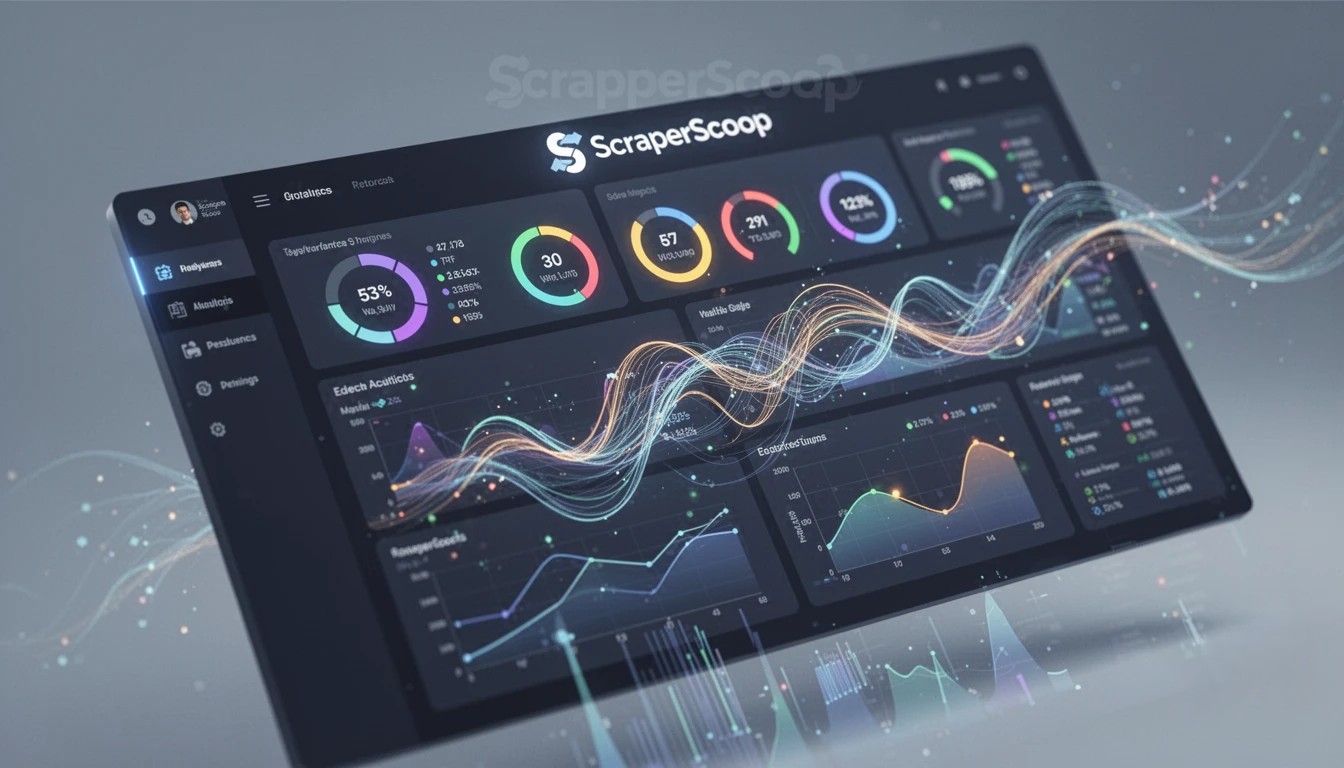
8. Building Real-Time EdTech Dashboards with ScraperScoop
Our solutions provide structured feeds (JSON/CSV) updated daily/hourly, integrated into custom dashboards with:
- Price tracking charts.
- Enrollment proxies and trend lines.
- Sentiment heatmaps.
- Alerts for new course launches or major discounts.
Start small (monitor 100 courses), scale to thousands across platforms and categories.
9. Challenges & Future Outlook: EdTech Through 2030-2035
Challenges: Post-correction profitability focus, regulatory scrutiny, digital divide in rural areas. Future: Market to reach USD 30-50 billion by 2030-2035; AI personalization, VR/AR integration, regional content, and hybrid models dominate. Scraping remains core for agility in this evolving landscape.
Conclusion
In 2026, scraping EdTech platforms is a strategic necessity for understanding India’s fast-evolving online education market. ScraperScoop delivers reliable, ethical pipelines to turn public data into competitive advantage—whether for pricing strategy, content planning, or investment decisions.
Ready to unlock real-time EdTech insights? Schedule Your Free 2026 EdTech Scraping Consultation & Demo. Tailored for Ahmedabad/Gujarat focus or pan-India scale—let’s discuss your needs today.
Request a free consultation
Ready to unlock the power of data?
Published: February 2026 | Category: EdTech, Online Education, Data Scraping, Market Intelligence | Author: ScraperScoop Team


