

Imagine this: you’re a category manager for a national grocery chain. Tomorrow morning, your CEO expects a pricing recommendation for organic avocados that outmaneuvers every competitor on Instacart – not just nationally, but across 50 specific ZIP codes. Three years ago, you’d be lost in spreadsheets with stale data, guessing. Today, with our Fresh & Fast US Grocery Delivery Menu & Pricing Dataset, that kind of micro‑precision is on your desk in minutes. At ScraperScoop, we’ve built the most comprehensive, frequently refreshed dataset of US online grocery menus and pricing. Whether you’re optimizing dynamic pricing, tracking competitors’ assortments, or feeding an AI-driven recommendation engine, this dataset is designed to give you an unassailable competitive edge.
Why the US Online Grocery Market Demands Real‑Time Data
The online grocery sector isn’t just growing – it’s evolving faster than any other retail segment. According to eMarketer, US digital grocery sales are projected to exceed $250 billion by 2027, with more than 70% of households now having tried online grocery shopping at least once. The pandemic accelerated a shift that never snapped back: 35% of consumers say they buy groceries online at least once a week. Major players like Instacart, Amazon Fresh, Walmart Grocery, and regional favorites (e.g., H‑E‑B, FreshDirect, Kroger Delivery) are in a never‑ending arms race over pricing, delivery speed, and product assortment.
In this environment, data becomes the most valuable ingredient. But here’s the problem: grocery prices change by the hour. A banana priced at $0.59 in the morning might jump to $0.72 by afternoon. A promotional “buy one get one free” might vanish before you can capture it. Static, monthly‑updated datasets are effectively obsolete before they’re delivered. Businesses need a data feed that mirrors the live shelf – and that’s exactly what we built.
Introducing the Fresh & Fast US Grocery Delivery Menu & Pricing Dataset
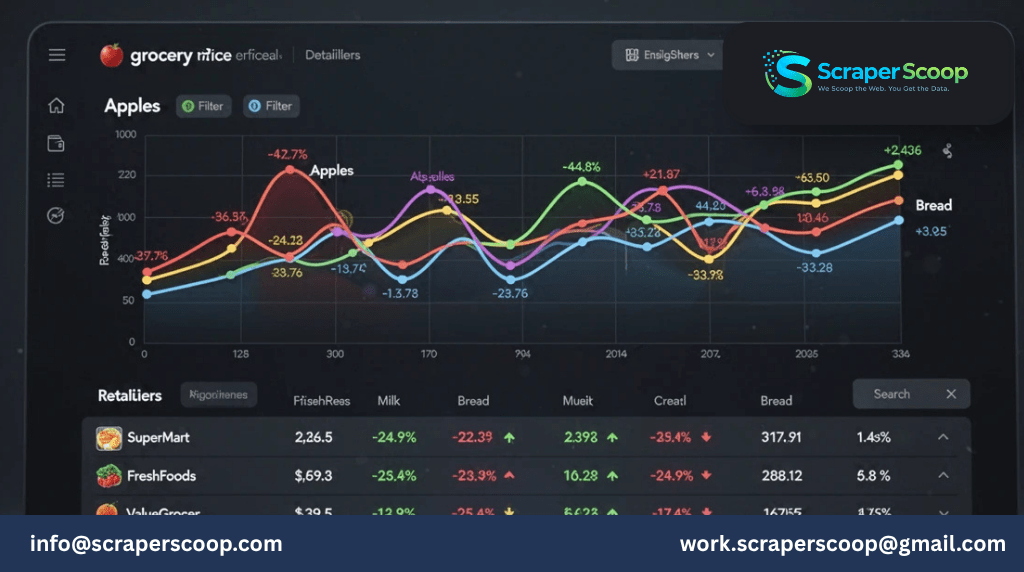
Our new dataset is a direct pipeline of structured, cleaned, and enriched grocery delivery data from the most popular online grocery platforms in the United States. It captures product‑level menus, real‑time prices, promotions, availability, and delivery details across thousands of ZIP codes. Whether you’re an analyst, a pricing intelligence platform, a hedge fund tracking consumer staples, or a CPG brand monitoring shelf presence, this dataset is tailored for plug‑and‑play integration.
Unlike generic scraped dumps that require weeks of cleaning, our dataset arrives standardized, deduplicated, and timestamped, ready to query. Refresh cycles can be customized – from daily updates for fast‑moving categories like produce and dairy to weekly snapshots for pantry staples. The result? You make decisions on data that’s as fresh as the groceries themselves.
What’s Inside: Deep Data Fields That Drive Decisions
Every record in the dataset contains a rich set of attributes that go far beyond price and name. This granularity ensures you can segment, compare, and model with surgical precision. Here’s a snapshot of the core fields:
| Field Category | Sample Fields | Example Value |
|---|---|---|
| Identifiers | product_id, sku, upc, retailer_id | SKU-98234-INSTA |
| Product Details | product_name, brand, category, sub_category, size, unit, description | Organic Hass Avocado, 4ct Bag |
| Pricing | regular_price, sale_price, promo_type, price_per_unit, was_price, savings_percent | $5.99 ($1.50/ct) |
| Availability | in_stock, stock_level, delivery_available, pickup_available | In Stock, 48 units |
| Retailer Context | retailer_name, store_location, zip_code, city, state, delivery_partner | Instacart (powered by Kroger), Austin, TX 78701 |
| Temporal | scrape_timestamp, price_effective_date, promo_start, promo_end | 2025-04-28 14:32:05 UTC |
| Enrichments | organic_flag, dietary_tags, unit_of_measure_std, packaging_type | Organic, Gluten-Free, Vegan |
Beyond these, we also capture delivery fee, service fee, minimum order threshold, membership requirements (e.g., Amazon Prime vs. free tier), and even substituted items when originals are out of stock. This depth makes the dataset incredibly versatile: you can answer questions like “What’s the median price of a gallon of organic whole milk on Walmart Grocery within a 20‑mile radius of Chicago?” with a single SQL query.
Coverage That Mirrors the Real Shopping Landscape
We don’t just scrape the biggest names; we mirror the way Americans actually shop. The dataset currently spans 15+ major platforms and hundreds of banner stores, covering urban cores, suburbs, and even Tier‑2 cities. Our geographic reach includes all 50 states, with dense coverage in top metros like New York, Los Angeles, Chicago, Dallas‑Fort Worth, and Miami.
| Retailer / Platform | Type | Geo Coverage | Data Points (Monthly) |
|---|---|---|---|
| Instacart (multi‑banner) | Marketplace / Delivery | 20,000+ ZIPs | ~120M SKU‑pricings |
| Amazon Fresh / Whole Foods | Direct Grocer | 1,500+ cities | ~45M |
| Walmart Grocery | Omnichannel | 3,000+ stores | ~80M |
| Kroger Delivery (via Instacart/Kroger.com) | Traditional + Online | 35 states | ~30M |
| Shipt (Target, etc.) | Marketplace | 5,000+ ZIPs | ~25M |
| FreshDirect, Peapod, H‑E‑B, & more | Regional / Niche | Select metros | ~15M |
Numbers reflect average monthly volume; actual data points scale with catalog size and refresh frequency.
How We Harvest the Freshest Data – Ethically and Reliably
You might wonder: How do you reliably pull such granular, millions‑of‑rows data without tripping anti‑bot systems? At ScraperScoop, data quality and sustainability are built into our scraping infrastructure from the ground up. We operate a distributed network of residential proxies and headless browsers that mimic organic user behavior, respecting robots.txt directives and rate limits. Our ethical scraping protocol never logs into user accounts or bypasses paywalls; we only access publicly visible menu pages. This clean approach ensures long‑term data access without legal grey areas, so you can integrate our dataset into your commercial products with confidence.
Every scrape run passes through our proprietary validation pipeline:
- Real‑time deduplication across retailer‑location‑SKU.
- Price sanity checks (e.g., flagging a $0.01 price spike as an error).
- Schema normalization – converting “1.5lb” and “24 oz” into a standard unit of measure.
- Enrichment tagging for dietary labels, brand tiers, and organic certification.
Only after these steps does the data enter the delivery queue – usually within 2 hours of scraping. The result is a dataset that is 97‑99% accurate in controlled benchmarks against manual spot checks.
Real‑World Use Cases: From Price War to Personalization
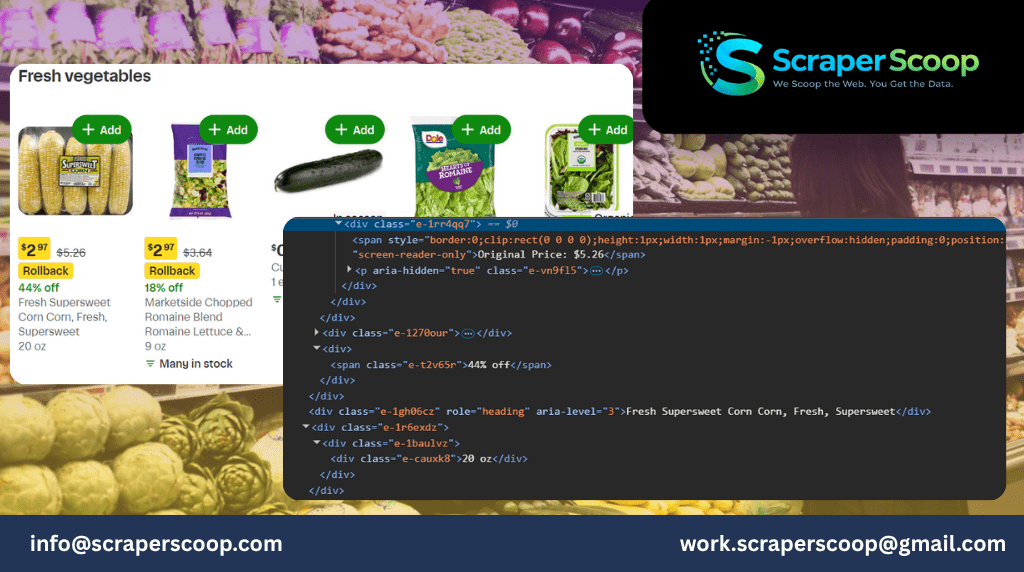
Let’s move from technical specs to business impact. The Fresh & Fast Grocery Dataset isn’t just a collection of numbers; it’s the engine behind mission‑critical retail strategies. Here’s how different teams already leverage it.
1. Dynamic Pricing & Competitive Intelligence
A top‑5 US grocery chain uses our dataset to monitor prices on 10,000 high‑velocity items across Instacart, Amazon Fresh, and Walmart. Their proprietary algorithm calculates an optimal price based on competitor elasticity and stock‑out signals. Within three months, they saw a 4.2% increase in gross margin on tracked categories while maintaining their price image. They also use the “was_price” and promo‑frequency fields to predict competitor promotional calendars, adjusting their own cycles pre‑emptively.
2. Assortment & Category Management
A CPG beverage brand subscribes to track SKU presence across all regional grocers. They discovered that a key competitor’s new kombucha flavor was listed in 72% of West Coast stores but absent in the Northeast – a gap they exploited with a targeted Northeast launch. By filtering on sub_category == 'kombucha' AND region == 'Northeast', they identified high‑opportunity ZIP codes within minutes, not months.
3. Market Entry & Site Selection
A European discount grocer planning its US debut leveraged historical and live data to analyze price positioning, delivery radius, and product gaps in 50 candidate cities. By comparing our dataset’s price‑per‑unit metrics against their target cost structure, they ranked markets by profitable white space. They saved an estimated $2 million in consulting fees and accelerated go‑to‑market by 8 months.
4. Consumer Trend Forecasting
Hedge funds and market research firms use longitudinal feeds to spot dietary shifts. Over six months, our data showed a 38% increase in “plant‑based meat” listings and a correlated 12% price drop – a clear signal of maturing supply. Algos built on this trend data informed equity positions across the alternative‑protein sector.
5. Personalization & Shopper Apps
Meal‑kit services and shopping‑list apps integrate our menu data to let users build carts with real‑time prices from their local store. One app saw a 23% lift in user engagement after switching from static data to our live feed. When a user adds “spinach,” the app automatically shows the cheapest option within their delivery zone, complete with stock‑out warnings.
Sample Data: Take a Peek at the Structure
Seeing is believing. Below is a small, anonymized extract of what a daily incremental file looks like. Notice how every record is immediately actionable.
| retailer | zip | product_name | brand | regular_price | sale_price | in_stock | promo_type | scrape_ts |
|---|---|---|---|---|---|---|---|---|
| Instacart/Wegmans | 10001 | Organic Blueberries, 6oz | Driscoll’s | $4.99 | $3.99 | TRUE | BOGO | 2025-04-28 09:15:22 |
| Amazon Fresh | 94102 | 365 Whole Milk, Gallon | 365 by WFM | $3.49 | $3.49 | TRUE | None | 2025-04-28 09:18:05 |
| Walmart Grocery | 60601 | Beyond Burger Patties, 2ct | Beyond Meat | $5.94 | $4.94 | FALSE | Rollback | 2025-04-28 09:20:47 |
Note: actual datasets contain 80+ fields and come in clean CSV, JSON, Parquet, or direct database sync.
Why This Dataset Outperforms Any Alternative
We know you have options – internal scraping teams, data marketplaces, or even manual collection. Here’s an honest comparison of what sets ScraperScoop apart.
| Feature | ScraperScoop Fresh & Fast | In‑house Scraping | Static Data Marketplaces |
|---|---|---|---|
| Update Frequency | Hourly to daily (customizable) | Depends on dev capacity | Monthly or quarterly |
| Data Freshness | As recent as 2 hours | Varies; often stale | Weeks old |
| Coverage Breadth | 15+ platforms, 50 states | Limited to target list | Often top 5 retailers only |
| Data Cleaning | Built‑in, ready to query | Requires data engineer | Minimal; inconsistent |
| Enrichment | Diet tags, UPCs, standardized units | Manual | Rare |
| Cost | Subscription, predictable | High (dev + infra) | One‑time, becomes obsolete |
The verdict is clear: if you need fresh, trustworthy data to power revenue‑critical systems, a purpose‑built dataset like ours isn’t a luxury – it’s the fastest route to ROI.
Technical Integration: How You Get the Data
We don’t believe in complex onboarding. Upon subscription, you’ll receive secure access to your preferred delivery method:
- Cloud Storage Sync: Direct delivery to your S3 bucket, Google Cloud Storage, or Azure Blob – updated automatically.
- Streaming API: Real‑time push via Webhook or REST API for time‑sensitive applications.
- Database Replication: For high‑volume consumers, we can set up a read‑only replica of your filtered dataset.
Formats include CSV (gzip), JSON (newline‑delimited), Parquet, and Avro. Full documentation, a data dictionary, and sample queries are provided. Your team can be up and running in under an hour.
“The ScraperScoop grocery dataset slashed our data preparation time by 80% and gave us pricing confidence we never had before. The ZIP‑level granularity is a game‑changer for regional campaigns.”
– Sarah K., Director of Pricing, National Grocery Chain
Quality Assurance That Matches the Freshness Promise
A dataset that’s fresh but inaccurate is worse than useless. That’s why quality assurance runs in parallel with every scrape cycle:
- Automated Outlier Detection: Prices outside historical ranges are flagged and manually verified if needed.
- Image‑to‑text verification: When menu data is rendered via images, our OCR‑plus‑human‑in‑the‑loop pipeline double‑checks critical fields.
- Cross‑retailer validation: Compare the same branded product across two platforms; if disparities exceed 5%, an alert triggers.
- Consistency monitoring: Daily dashboards track fill rates, missing categories, and stale timestamps. If a ZIP code drops below 90% completeness, it’s re‑scraped immediately.
Frequently Asked Questions
How often is the dataset updated?
We offer daily and hourly refresh tiers. Best‑selling SKUs can be captured every 2 hours; the full catalog is refreshed at least every 24 hours. You choose the cadence based on your use case and budget.
Which retailers and platforms are covered?
The dataset spans Instacart (with banners like Costco, Kroger, Publix, Aldi), Amazon Fresh & Whole Foods, Walmart Grocery, Shipt/Target, FreshDirect, H‑E‑B, Peapod, and more. Custom retailer additions are possible.
Can I filter by geography or product category?
Absolutely. The dataset is pre‑segmented, but we can also provide filtered feeds that match your exact ZIP code list, categories, or even specific SKUs. This reduces data transfer and storage costs.
What about historical data?
We maintain a rolling two‑year historical archive. If you need deeper history, talk to us about back‑fill options. Trends become visible after just a few weeks of data.
Is it legal to use scraped grocery data?
We only scrape publicly available pages without circumventing any login or paywall, in compliance with US regulations. Our data is factual pricing information, not copyrighted creative content. Thousands of businesses rely on similar competitive intelligence every day.
How do I get a sample?
It’s simple – just click the button below or reach out via our contact form. We’ll prepare a no‑cost sample tailored to your interest, whether it’s a specific city or product category.
📞 Talk to a Data Specialist – Get Your Sample
Or email us directly at info@scraperscoop.com
Take the First Bite into Fresh Competitive Intelligence
The US online grocery market is ultra‑competitive, and the gap between winners and those playing catch‑up is often just one insight away. With our Fresh & Fast Grocery Delivery Menu & Pricing Dataset, you’re not buying data – you’re investing in speed, accuracy, and strategic clarity that shows up directly on your P&L. Whether you’re fine‑tuning prices, exploring new markets, or building the next big grocery app, the foundation needs to be as fresh as the inventory on the shelves. Let’s build that foundation together.
Ready to transform your grocery data strategy? Get in touch and let’s dish out a customized plan that fits your appetite.


