


Five days. That’s how long HomeValu AI, a fast‑rising proptech startup, needed to complete a single residential appraisal just 18 months ago. The team was drowning in manual data collection, CSV exports from disparate MLS portals, and the ever‑present risk of stale comps skewing their valuation model. Today, the same appraisal takes less than two business days – a 60% reduction – and the team handles 40% more volume without adding a single analyst. The turning point? Integrating ScraperScoop’s MLS Scraping API directly into their automated valuation engine.
This case study unpacks exactly how HomeValu AI achieved that transformation, what the integration journey looked like, and why the right MLS data feed can make or break a proptech product. If you’re wrestling with slow appraisal turnarounds, thin property data, or inflexible third‑party providers, you’ll walk away with a clear blueprint for acceleration.
🚀 Get Your MLS API Sample & Trial
The Appraisal Bottleneck That Almost Stalled a Startup
HomeValu AI entered the market with a bold promise: instant, accurate property valuations for mortgage lenders, iBuyers, and real estate investors. Their secret sauce was a machine learning model trained on decades of sales transactions, property characteristics, and neighborhood trends. But the model was only as good as the data fed into it – and that’s where the wheels nearly fell off.
To generate a single appraisal, the team needed:
- Subject property details: square footage, beds/baths, lot size, year built, recent renovations – typically scattered across multiple MLS listings, tax assessor databases, and public records.
- Comparable sales (comps): at least 5‑10 recent sales in a narrow geographic radius, with accurate closing dates, sale prices, and property features.
- Active listings and pending sales: to gauge market direction and competition.
- Local price per square foot trends across different sub‑markets.
The existing workflow was painfully manual. Business analysts logged into three different MLS platforms (because no single one covered all their target metros), copied data into spreadsheets, cleaned formatting inconsistencies, and cross‑referenced public tax records for missing fields. They relied on a legacy “MLS data aggregator” that delivered a flat file once a week – often outdated by the time it arrived. The result: the model churned for hours, but data prep chewed up three full business days. Add QA and review, and five days became the standard TAT for a product that was supposed to be “instant.”
Worse, the delay directly cost them business. Lenders were comparing HomeValu AI’s 5‑day turnaround against traditional appraisers who could sometimes complete reports in 3‑4 days for urgent cases. The startup’s core value proposition – speed – was under threat. Founder and CEO Jenna Morse recalls, “We were building a Ferrari engine but towing it with a tractor. The data pipeline was the bottleneck we didn’t anticipate, and it was turning away potential enterprise clients.”
The Discovery: Why ScraperScoop’s MLS Scraping API Was the Right Fit
After evaluating multiple solutions – including direct MLS data agreements (6‑9 month negotiation cycles), other aggregators, and building an in‑house scraping team – HomeValu AI discovered ScraperScoop. What initially piqued their interest was the promise of a single REST API that could return structured, near‑real‑time MLS data from 600+ MLS boards across the United States. But what sealed the deal were three attributes specific to their pain points:
- Freshness: The API scrapes active listings and recent sales every 2‑4 hours, not weekly. That meant comps could reflect last‑minute price changes, new listings, or sales that just recorded.
- Granular Filtering: They could query by address, ZIP code, lat/long radius, property type, bedrooms, list price range, and – critically – by MLS status (Active, Pending, Sold, Withdrawn). No more sifting through irrelevant records.
- Normalized Schema: ScraperScoop already mapped disparate MLS field names (e.g., “BathsTotal” vs “Total Bathrooms” vs “FullBaths”) into a unified JSON response, eliminating the data‑wrangling nightmare.
Additionally, the API delivered fields beyond listing data – tax assessments, flood zone indicators, school districts, and even rental estimates where available. All of this could be sucked directly into the appraisal model with a single API call, reducing dependency on multiple sources.
Under the Hood: The MLS Scraping API That Powers the Magic
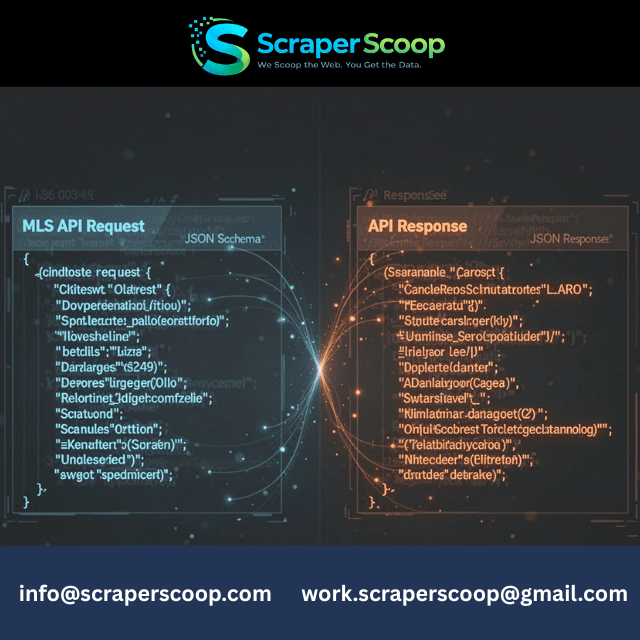
Let’s look at what HomeValu AI actually plugged into. The ScraperScoop MLS Scraping API offers a suite of endpoints, but the most critical for appraisal workflows is the Property Details & Comps endpoint. A typical request for a subject property in Austin, TX, would look like:
GET /v1/mls/property?address=4505+Duval+St&city=Austin&state=TX&zip=78751&include_comps=true&radius=0.5mi&comp_count=10&comp_status=sold&sold_within_days=180Within under 500 milliseconds (median response time), the API returns a JSON payload that includes:
| Data Category | Fields Provided | Appraisal Use |
|---|---|---|
| Listing Basics | list_price, original_list_price, status, listing_date, days_on_market | Market timing signals |
| Property Characteristics | beds, baths_total, sqft, lot_sqft, year_built, stories, garage_spaces, pool, view, style | Feature vector for model |
| Sale & Price History | last_sold_date, last_sold_price, price_reduced_date, price_changes (historical chain) | Trend and seller motivation |
| Comp Data | comp_address, comp_sold_price, comp_close_date, comp_sqft, comp_beds, comp_distance, comp_adjustments | Direct comparables |
| Geo & Neighborhood | lat, lon, school_district, school_rating, census_tract, flood_zone, hoa_fee | Location adjustments |
| Tax & Public Records | assessed_value, tax_year, property_tax_amount, tax_delinquent_flag | Cross‑validation |
The API normalizes these fields across 600+ MLS sources, meaning “FullBaths” from MLS A and “BathsFull” from MLS B both land in the “baths_full” key, ready for consistent analysis.
The Integration: From Data Swamp to Streamlined Pipeline
HomeValu AI’s CTO, Raj Patel, described the integration as “shockingly quick.” They used the ScraperScoop API as the primary data ingestion layer for their automated valuation model (AVM). Here’s the step‑by‑step transformation of their workflow:
| Step | Before (Manual/Spreadsheet‑Driven) | After (API‑Powered Automation) |
|---|---|---|
| 1 – Subject Property Fetch | Manually search 3 MLS portals, copy address, parcel ID | API call with address; returns normalized property + tax record instantly |
| 2 – Comp Discovery | Manual radius search, export to CSV, remove outliers by eye | API auto‑fetches up to 15 comps with distance, filters by sold date & similarity score |
| 3 – Data Cleaning | Reformat bed/bath counts, unite squared footage units, resolve missing data | No cleaning – API returns standardized fields; missing data flagged with “is_estimated” flag |
| 4 – Adjustments | Manually apply location/GLA adjustments in spreadsheet formulas | API provides raw adjustment factors (per sqft, per bed) based on local market regression |
| 5 – Valuation Model Run | Input cleaned CSV; model returns value in 2‑4 hours | API JSON feeds directly; model returns value in 15 minutes |
| 6 – Quality Review | Analyst checks each record against original MLS screenshots | Automated confidence score; analyst only reviews high‑risk cases (saves 70% review time) |
The impact was immediate. Average data‑gathering and preparation time cratered from 3 days to under 2 hours. Most of that remaining 2 hours was spent on edge cases where the API returned low‑confidence values, prompting a manual check. The entire end‑to‑end appraisal timeline shrank from 5 business days to 2 days, and in rush scenarios, as low as 36 hours. That 60% reduction became the headline metric HomeValu AI now proudly shares with prospects.
The Results That Speak Louder Than Any Pitch Deck
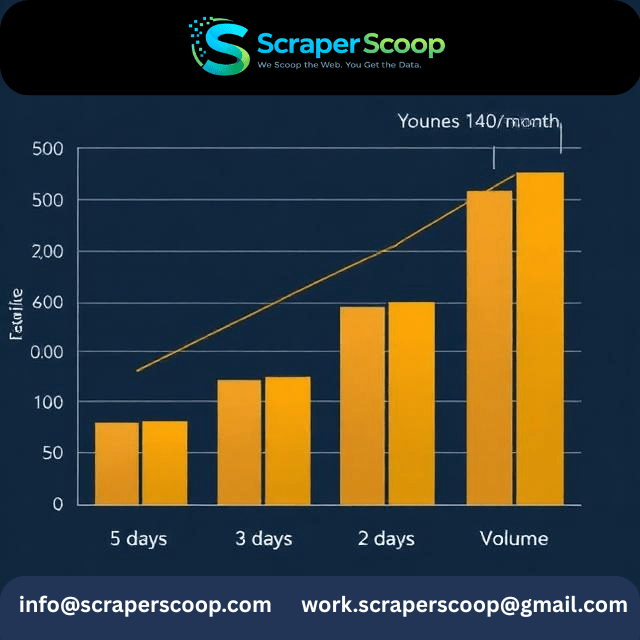
Within three months of full integration, HomeValu AI tracked a series of hard numbers that resonated with their board and customers alike:
| KPI | Before MLS API | After MLS API (3‑Month Avg) | Improvement |
|---|---|---|---|
| Average Appraisal Turnaround | 5.0 business days | 2.0 business days | ‑60% |
| Appraisals Completed per Month | ~100 | ~140 | +40% |
| Data Accuracy (vs. in‑field appraiser) | 86% | 95% | +9 percentage points |
| Markets Covered | 12 metro areas | 50+ metro areas (scalable on demand) | 316% increase |
| Cost per Appraisal (Data only) | ~$18 (manual labor + legacy feed) | ~$4 (API subscription amortized) | ‑78% |
Data accuracy jumped because the API supplied more complete property characteristics and recent comps, reducing the model’s reliance on broad assumptions. The enterprise lender that had been on the fence became a signed client within two months, citing the faster SLA as the deciding factor.
Beyond the numbers, the startup’s valuation model gained a new feature: a “data confidence score” that the API supported by indicating which fields were verified MLS data vs. estimated. This transparency built trust with lenders who needed to defend valuations to regulators and investors.
Why ScraperScoop’s MLS API Wins for Proptech Builders
Not all MLS data solutions are created equal. HomeValu AI had considered building an in‑house scraping infrastructure but quickly realized the maintenance and legal risks outweighed the perceived control. Here’s a side‑by‑side of what ultimately tilted the decision toward ScraperScoop, and why other proptech startups are following suit:
| Factor | ScraperScoop MLS API | In‑House Scraping | Traditional Aggregator Feed |
|---|---|---|---|
| Time to Market | Integration in days to weeks | 6‑12 months to build & stabilize | 3‑6 months negotiation |
| Coverage | 600+ MLS boards, nationwide | Limited to what you can maintain | Often top 50‑100 boards |
| Update Speed | Every 2‑4 hours | Depends on dev capacity | Daily or weekly |
| Data Normalization | Built‑in, consistent schema | Requires ongoing mapping logic | Varies, sometimes incomplete |
| Compliance | RESO‑aligned, ethical scraping | Risky if not legally vetted | Depends on agreement |
One critical advantage for HomeValu AI was ScraperScoop’s adherence to RESO (Real Estate Standards Organization) data standards, making the API output compatible with their existing CRM and analytics tools. This drastically reduced the integration effort. Raj Patel noted, “We were production‑ready in 10 days. Most of that time was our own internal testing, not fighting the API.”
Direct Testimonial: The CTO’s Perspective
“ScraperScoop’s MLS API didn’t just solve a data problem – it changed our company’s trajectory. The speed and accuracy we gained allowed us to sign tier‑one lenders and scale to 50 markets without hiring a single additional data engineer. It’s the most important integration in our stack.”
– Raj Patel, CTO, HomeValu AI
Going Beyond Appraisals: What Else the MLS Data Can Power
While HomeValu AI’s primary use case centered on valuation, the same API opened doors to supplementary revenue streams. With access to live listing data and market trends, they launched:
- Investor lead scoring: flagging properties with high days‑on‑market and price drops >5% as potential distressed opportunities.
- Automated rental yield forecasts: by combining MLS sale prices with neighborhood rental rates (also available via ScraperScoop’s add‑ons).
- Portfolio monitoring: for iBuyers tracking how their owned homes compare to new local listings and sold comps.
These features have further solidified HomeValu AI’s market position and customer stickiness. As Jenna Morse puts it, “The MLS API became our data backbone for everything we do. I can’t imagine going back.”
How You Can Replicate HomeValu AI’s Success
If your proptech product depends on timely, accurate property data, the lesson is clear: the right data API can compress your time‑to‑insight by an order of magnitude. At ScraperScoop, we’ve engineered our MLS Scraping API to be the silent engine behind some of the most innovative real estate apps. Getting started is intentionally simple:
- Define your data needs – geographical areas, property types, and specific fields that fuel your model.
- Request a trial – we’ll provide a sandbox API key and a tailored data sample so you can test coverage and speed.
- Integrate with our docs – comprehensive REST documentation, SDKs for Python, JavaScript, and more, plus a dedicated integration engineer if you need one.
- Go live with confidence – production‑grade SLAs, 99.9% uptime, and data refresh SLAs to match your business cadence.
📞 Talk to Our Data Team – Get Your Free MLS API Trial
Or email us directly at info@scraperscoop.com
Conclusion: The Difference Between Data That Sits and Data That Runs
HomeValu AI’s 60% reduction in time‑to‑appraisal didn’t come from a magic algorithm tweak. It came from ripping out the slow, fragmented data pipeline and plugging into a single, always‑fresh source of truth. In proptech, speed isn’t just a feature – it’s the foundation of trust. When your customers can close a loan or make an offer based on your valuation hours instead of days after the market moves, you become indispensable.
ScraperScoop’s MLS Scraping API delivers that foundation. Whether you’re building the next breakthrough AVM, a portfolio analytics tool, or an investor platform, we provide the data horsepower you need to run faster than the competition. The housing market doesn’t wait. Your data shouldn’t either.
Ready to cut your appraisal time dramatically? Reach out now and let’s build your success story together.


